Hourly billing can make every client request feel like a race against the clock. You work more, explain more, and still may not know how much money will arrive next month.
Package pricing gives your client a clear result and gives you a clearer business model. This guide shows you how to turn one service into a useful package without guessing, overpromising, or hiding the real work.
Why Package Services Instead of Selling Time?
When you charge per hour, clients often focus on the clock. They may ask how many hours a task will take, compare your hourly rate with another provider, or delay a decision because the final amount is not clear.
A package changes the conversation. You are no longer selling minutes. You are selling a defined result, a clear process, and the confidence that comes with experienced work.
Benefits of package pricing
- Clients know the expected price before work begins.
- You can plan revenue and capacity more easily.
- Your expertise matters more than the number of hours.
- Clear scope can reduce extra requests and confusion.
Risks to manage
- A vague package can create scope creep.
- Wrong pricing can reduce your profit.
- Custom requests may need a separate offer.
- You must define what is not included.
Package pricing does not mean every project has one fixed price forever. You can review the offer, test the price, and improve it as you learn more about your clients and the work involved.
What the Top Pricing Articles Do Well
The supplied ranking pages focus on education first. Their likely audience is B2B rather than casual consumers. A reader usually arrives with a real business problem, such as uncertainty about how to price services or how to choose between hourly pricing and package pricing.
| Ranking page | Primary goal | Likely CTA | Audience and action |
| Better Proposals: How to Price a Service | Inform and support a product-led sale | Proposal software or proposal action | Warm B2B readers may start a proposal or explore the tool |
| Geek Pack: Hourly Pricing vs Package Pricing | Inform and challenge hourly habits | Community, offer, or next educational step | Cold to warm freelancers seek a better pricing model |
| Business Growth by Numbers: Services and Packages | Inform and generate business interest | Consultation, inquiry, or pricing resource | Business owners may request help with pricing |
The common lesson is simple: do not ask for a sale before proving that you understand the reader’s problem. The most useful CTA here is a practical next step. A package worksheet, service review, or short application can move a reader forward without creating pressure.
How to Package Your Services Instead of Charging Hourly: 8 Steps
1. Choose one client and one problem
Start narrow. “Marketing help” is too broad. “A monthly social media plan for local fitness studios” is easier to explain, price, and sell.
Ask who has the problem, what it costs them, and why they need help now. A focused client group helps you write better package names and stronger sales copy.
2. Define the outcome
Describe what changes after the service. The outcome could be a ready-to-use website, a cleaned-up bookkeeping system, a launch plan, or a set of qualified sales appointments.
Do not promise results you cannot control. State the deliverable and the intended business benefit. This keeps your marketing honest.
3. Write the scope
List the exact work, number of meetings, number of deliverables, timeline, revision limits, and client responsibilities. If the client must provide images, data, approvals, or access, say so.
4. Build three package levels
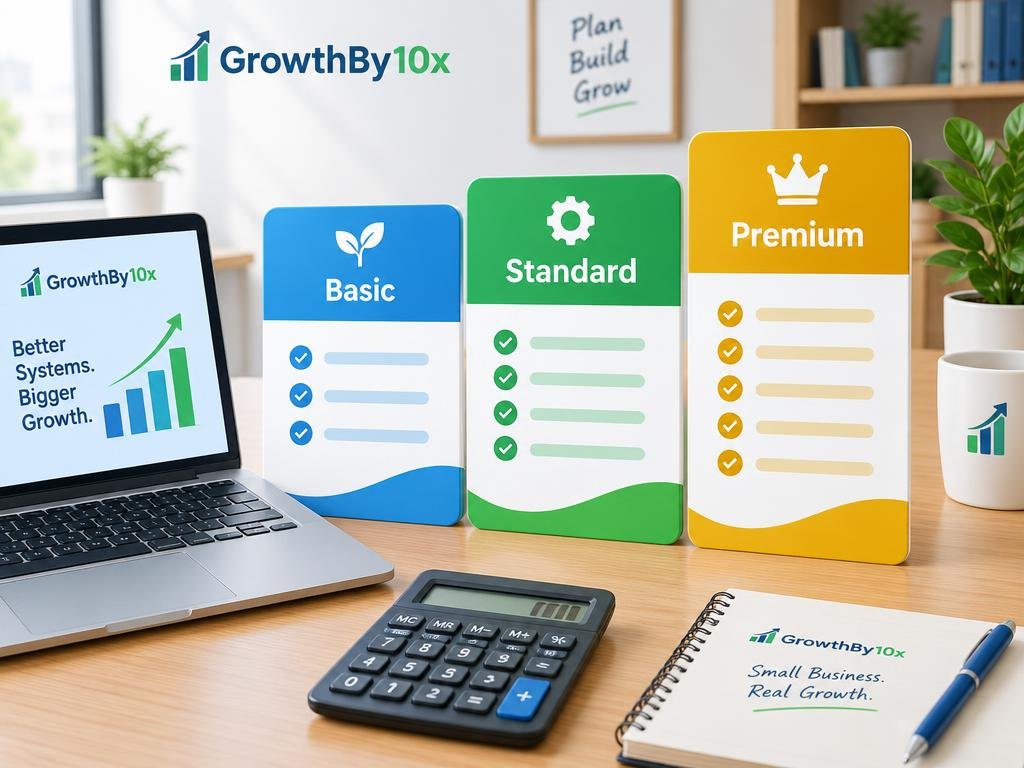
Create a basic, standard, and premium option. Three choices help clients compare value without forcing you to create a new custom price for every request.
5. Set a value-based price
Consider the value of the outcome, your expertise, the complexity of the work, the risk, and the client’s business impact. Use your estimated hours to check capacity, not to define the final price.
6. Protect the boundaries
State what happens when a client asks for extra work. Use an add-on menu, a new package, or an hourly rate for work outside the agreed scope.
7. Present the offer clearly
Lead with the problem and outcome. Then show deliverables, timeline, price, payment terms, and the next step. Avoid a long list of tasks without context.
8. Test and improve
After each project, review profit, client questions, revision time, and the quality of the final result. Adjust the package when the evidence shows that a part of the offer is unclear or inefficient.
Build Three Packages Clients Can Understand
Imagine you help small businesses improve their social media. The client does not really want “ten hours of content work.” The client wants a consistent presence that supports marketing and sales.
Basic: Clear Start
A simple foundation for a business that needs direction.
- One strategy call
- Four social media posts
- One content calendar
- One revision round
Standard: Consistent Growth
A complete monthly system for regular marketing.
- Strategy and planning call
- Twelve social media posts
- Caption and hashtag support
- Monthly performance review
- Two revision rounds
Premium: Marketing Partner
More support for a business with larger goals.
- Weekly planning support
- Twenty posts and creative direction
- Community response guidelines
- Campaign review and reporting
- Priority communication
Each tier should feel complete. Do not make the basic option a poor version of the service. Instead, make each package fit a different need, level of support, or speed of progress.
Want a clearer offer?
Use the GrowthBy10x package review to turn one hourly service into a defined offer with scope, tiers, and a client-friendly next step.
Set Pricing, Payment Terms, and Boundaries
Your price should reflect value, expertise, complexity, urgency, and business impact. It should also support your real business costs. Include software, taxes, admin time, marketing, and time spent in sales conversations.
One useful check is capacity. If you can complete four standard packages per month, the price must support your income goal without assuming every week will be full. This is more useful than multiplying a low hourly rate by a large number of hours.
| Hourly billing | Package pricing |
| Client pays for time used | Client pays for a defined result |
| Final amount may be uncertain | Price is clear before work begins |
| More hours can mean more money | Better systems can improve profit |
| Scope may expand slowly | Scope is agreed in advance |
Set a deposit or payment schedule. For example, you might collect a deposit before the start and the balance at a stated milestone. Include the project start date, approval deadlines, communication channel, response time, and cancellation terms.
For out-of-scope work, explain the process before the project begins. A simple sentence works: “Requests outside this package will be quoted separately before work starts.”
Present Packages Without Sounding Pushy
Start the sales conversation with questions. What is the client trying to improve? What has already been tried? What deadline matters? What would make the work successful?
Then connect the answer to one package. Do not send a long menu with no guidance. Explain why the recommended option fits the client’s problem and what the client must provide for the work to succeed.
Use outcome-led language
- “Build a launch-ready website in four weeks.”
- “Create a simple bookkeeping system for monthly reporting.”
- “Plan a consistent content system for your next campaign.”
Avoid time-led language
- “I will spend ten hours on your account.”
- “You can buy my time per hour.”
- “I will do whatever is needed.”
A clear proposal should show the problem, recommended package, deliverables, timeline, investment, responsibilities, and next action. This is where proposal tools and a strong website can support your process, but clear thinking matters more than design.
Turn your service into a simple offer
Send your current hourly service to GrowthBy10x and request a practical package review. You will know what to clarify before speaking with clients.
Handle Common Package Pricing Problems
“What is your hourly rate?”
You can answer briefly: “I price this service by package because the goal, scope, and result are clearer for you. The recommended package is $X and includes these deliverables.” If the client still needs hourly support, offer an hourly option with a minimum block and clear limits.
“I do not know the full scope yet.”
Use a paid discovery phase. It can include research, a review call, and a written plan. After discovery, you can price the larger project with better information.
“Clients keep asking for more.”
Scope creep often begins with unclear language. Use a written scope, revision limit, approval deadline, and change process. Be polite and firm when a request changes the original work.
“What if I underprice the package?”
Track the real time, costs, and client value after the first few projects. If the package takes too long, reduce the scope, improve the process, or raise the price for new clients. Do not quietly add unpaid work.
When is hourly billing still useful?
Hourly pricing can make sense for emergency support, unpredictable research, open-ended technical work, coaching sessions, or a client who needs flexible access rather than a defined outcome. You can also use an hourly rate for out-of-scope requests while keeping your core services packaged.

Package Pricing Checklist for Your Next Service
Use this short checklist to change one hourly service into a clear package. Complete it before you update your website or send a proposal.
- Choose one target client with a specific problem.
- Write the measurable outcome or transformation you support.
- List every deliverable, meeting, revision, and deadline.
- State what the client must provide and when approvals are due.
- Create basic, standard, and premium package options.
- Set the price using value, expertise, complexity, and business impact.
- Check that the price supports costs, capacity, and profit.
- Add payment terms, communication rules, and an out-of-scope process.
- Present one recommended package with a clear reason.
- Review client feedback and profitability after each project.
Package pricing works best when it protects both sides. Your client gets a clearer promise, while you get a clearer plan for time, money, and delivery. Start with one service, test it with real clients, and improve the offer each year as your experience grows.
Take the next practical step
Ready to stop selling time? GrowthBy10x can help you shape a focused package that is easier to explain, price, and deliver.