
When every client sees one price, your service can look like a simple task. A three-package offer changes that view. It helps clients compare outcomes, understand scope, and choose the level of support that fits their goals.
This guide shows you how to build a clear 3-tier pricing model for writing and design work. You will learn what belongs in each tier, how to set price points, and how to avoid weak packages that create more questions than sales.
What the top-ranking pages teach about CTA strategy
The leading pages for the keyword focus on education before conversion. They explain why tiered pricing works, show examples, and then guide business readers toward a product, demo, pricing page, or related resource.
Maxio: commercial education
Maxio’s article serves SaaS teams that need examples and a stronger pricing structure. Its likely audience is B2B, warm, and connected to a subscription product. The conversion path points toward learning more about a pricing or revenue platform.
CloudZero: explanation and product relevance
CloudZero explains tiered pricing through software and usage examples. Its readers may be exploring cloud costs, storage space, usage-based tiers, or customer value. The natural action is to explore the online service or request a conversation.
Cone: practical service strategy
Cone speaks more directly to service businesses. Its CTA approach fits readers who want to package work, present options, and simplify client decisions. A template, sign-up, or product tour is a logical next step.
Common CTA patterns across the pricing SERP
These pages tend to use a native presentation rather than an aggressive sales pitch. The CTA appears after the article has explained the pricing problem and built trust.
- Educational content comes before the commercial prompt.
- Buttons use action language such as explore, start, book, or learn more.
- Product pages and sign-up paths support warm B2B visitors.
- Examples help readers understand the offer before they see the next action.
- Links often appear in the middle and at the end of a long article.
For your audience, the best CTA is not a sudden sales request. It is a useful next step. Offer a package worksheet, proposal template, or simple pricing calculator. This keeps the action aligned with search intent.
Why a tiered pricing model works for freelance services
A tiered pricing model gives clients more than one way to buy. It turns a vague service into a clear set of pricing options. Each tier should solve a different version of the same problem.
For example, a writing client may need a quick article, a complete content package, or a full campaign. A design client may need one logo concept, a visual identity, or a complete brand system.
This structure can support revenue growth because it serves a wide range of customers without forcing you to create a new offer for every inquiry. It can also improve customer retention when the package grows with the customer’s needs.
Core idea: The tiers should not be three random amounts. They should be three clear levels of scope, support, speed, expertise, or expected outcome.
Start with a simple package worksheet
List your client’s main problem, the result you create, and the work required at each level. Use the worksheet before you set your price.
The three pricing tiers: essential, recommended, and premium
A strong tiered pricing structure usually has an essential package, a recommended package, and a premium package. The names can change. The job of each tier should remain clear.
Essential
A focused solution for clients with a smaller scope, lower risk, or limited budget. It should solve one meaningful problem without including every feature.
- Small project scope
- Defined deliverables
- Standard timeline
- Limited revisions
Recommended
The balanced option for clients who want a complete result and useful guidance. It should offer the best fit for your most common project.
- Broader scope
- More strategic input
- Helpful review points
- Clear support limits
Premium
A high-touch solution for clients who value speed, depth, access, and a more complete outcome. It should include meaningful extras, not filler.
- Largest scope
- Priority scheduling
- More collaboration
- Advanced deliverables
How freelance writers can build three pricing tiers
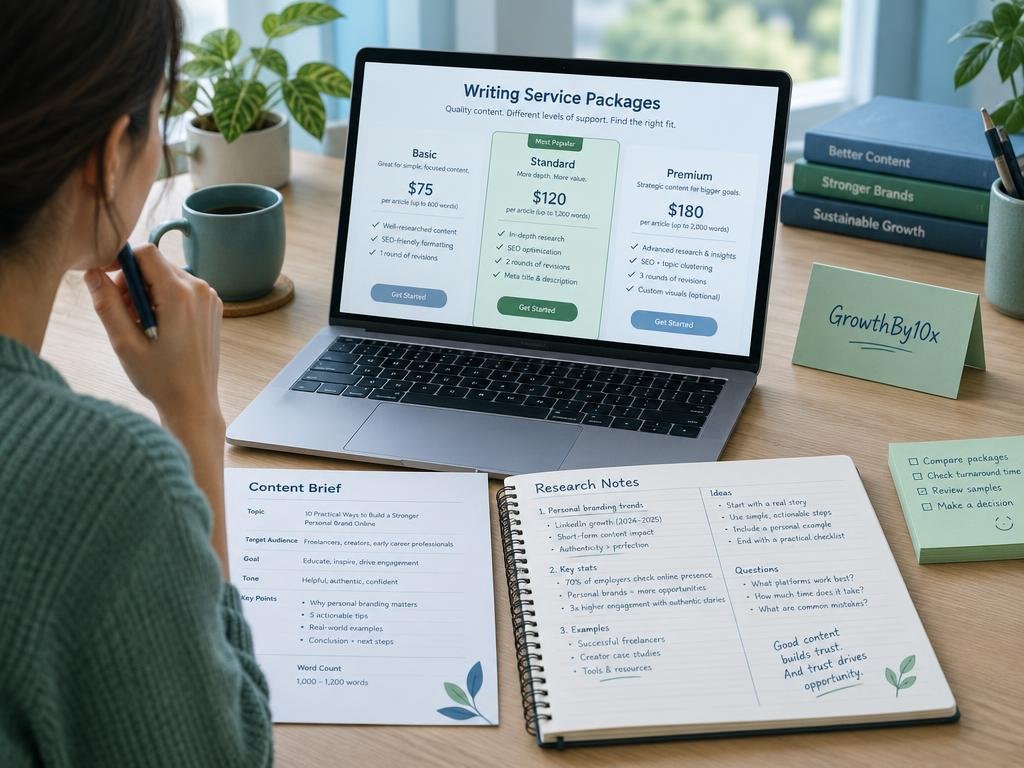
Writers can create pricing tiers around word count, research depth, content format, editing, strategy, and publishing support. Do not sell words alone. Connect each plan to the client’s purpose.
Essential writing package
This package may include one short article, a basic brief review, standard research, one draft, and one revision round. It suits a small business that needs consistent content but already has a topic and content direction.
Set the price by estimating research time, writing time, editing time, project management, and payment costs. Add room for the skill involved. A fast writer is not selling less value simply because the work takes fewer hours.
Recommended writing package
This plan may include a longer article, topic research, search intent review, a headline set, stronger editing, and two revision rounds. It suits a customer that wants content ready for publication with less internal work.
Make this the recommended choice because it matches the most common client need. Explain the reason in plain language. For example, say that the plan includes research and editing so the client receives a more complete piece, not just a first draft.
Premium writing package
The higher tier may include a content brief, interviews, expert research, several related pieces, internal linking suggestions, and upload support. It suits a company that wants a content system rather than one document.
Protect the package from scope creep. State the number of interviews, documents, articles, revision rounds, and meetings. A premium tier should feel deeper and more useful, not unlimited.
How freelance designers can build three pricing tiers
Designers can separate tiers by concept depth, number of assets, brand strategy, file formats, handoff support, and implementation help. A client should see how the higher tier improves the final use of the design.
Essential design package
An essential logo package could include one design direction, two refinement rounds, a primary logo, and standard file formats. It suits a new business that needs a clean starting point.
Keep the scope useful. A low tier should not be a poor version of your service. It can be smaller, but it must still produce a professional result.
Recommended design package
The recommended package could include two or three design directions, a color palette, typography guidance, social profile assets, and a short brand guide. It suits a business that wants consistency across several channels.
Explain the outcome. The client is not only buying more files. They are gaining a system that helps the company look consistent and make faster design decisions.
Premium design package
The premium plan could include brand strategy, audience research, a broader identity system, presentation templates, campaign assets, and a guided handoff. It suits a company preparing for a launch, repositioning, or major growth.
Set boundaries around meetings, feedback owners, file delivery, and future work. Extra support is valuable only when you define how it works.
Build your first three design packages
Use a visual proposal tool to show scope, outcomes, and pricing in one place. Keep the client focused on the difference between each tier.
Sample pricing structure for writers and designers
The amounts below are examples, not universal rules. Your pricing should reflect your niche, experience, market, positioning, client type, and project complexity.
| Tier | Writer example | Designer example | Best fit |
| Essential | One focused article, basic research, one revision | One logo direction, standard files, two refinements | Small or clearly defined need |
| Recommended | Strategic article, search research, editing, two revisions | Identity starter system, brand guide, social assets | Most regular business projects |
| Premium | Content plan, interviews, multiple pieces, publishing support | Full identity, templates, campaign assets, guided handoff | Launches, growth, or complex change |
Use this framework to compare effort and outcome. Do not copy another freelancer’s price point without checking your own costs and capacity.
How to set price points without guessing
Start with scope. Write down each deliverable and estimate the time needed for planning, production, review, communication, and administration. Then add a margin for expertise and business costs.
Next, consider value. A sales page that helps a company win customers may be worth more than a simple internal memo, even if both take a similar number of hours. A brand identity used across many channels may justify a higher tier than a single graphic.
- Record the work included in each plan.
- Estimate total delivery time, not only production time.
- Set a minimum price that protects your business.
- Adjust for urgency, complexity, access, and risk.
- Check whether the outcome supports the price.
Usage-based tiers are less common for freelance services, but they can work in some cases. A writer might price a monthly content volume. A designer might price a set number of campaign assets. Make the usage limit easy to understand.
How to make the middle tier the recommended option
The middle tier should be the most useful choice for your customer base, not a trick. It needs a clear reason to exist between the other two tiers.
Give it the scope that solves the full problem for most customers. Label it “Recommended” only when your explanation supports that label. Describe what it helps the client do, and show which work it removes from the client’s plate.
Good guidance
- Explain the outcome of the package.
- Show the extra work in plain language.
- Use honest examples from common projects.
- Let the client choose without pressure.
Weak pressure tactics
- Fake countdowns or false scarcity.
- Hiding important limits until checkout.
- Making the basic tier unusable.
- Adding random extras with no purpose.
Boundaries that make every pricing tier stronger
Clear boundaries protect your time and build trust. Every plan should state what the client receives and how the project will run.
Revisions
State the number of rounds, what counts as a round, and when new direction becomes a change request.
Timeline
Give a delivery range and explain what happens when feedback arrives late or the project pauses.
Communication
List the main channel, response window, meeting limit, and person responsible for approving work.
Deliverables and ownership
List file types, word counts, page counts, formats, access, licensing, and final handoff details. If a client needs source files or commercial rights, include them in the correct tier or price them separately.
Common tiered pricing mistakes to avoid
Many freelancers create three pricing tiers because it sounds professional, then make each tier almost identical. That gives customers no useful reason to choose a higher plan.
- Packages are too similar: Change scope, support, speed, or outcome so each tier has a clear role.
- The basic tier is underpriced: A low price can attract difficult projects and leave no room for good work.
- The premium tier is overloaded: Do not promise unlimited work, unlimited revisions, or constant access.
- Features replace outcomes: Explain why a deliverable matters to the customer.
- Boundaries are missing: Define revisions, meetings, deadlines, and handoff terms.
- Every client gets the same plan: Use the structure as a starting point and customize the scope when needed.
How to customize your tiered pricing strategy
Your pricing tiers should reflect the customers you want. A beginner-friendly offer may focus on a clear result and simple process. A specialist offer may focus on research, expertise, and business impact.
Review your customer base. What do clients ask for most often? Where do projects become difficult? Which service creates the strongest result? Use those answers to shape your pricing plan.
You can also build tiers around different buying needs. One client may value a fast turnaround. Another may value strategic guidance. A third may need more assets or customer support.

How to present pricing options in a proposal or service page
Start with the client’s goal. Then show the work needed to reach that goal. Present the three tiers after the context is clear.
Keep each package easy to scan. Use the same labels in every tier: scope, deliverables, timeline, revisions, communication, and price. This helps customers choose based on fit rather than confusion.
Use a short recommendation paragraph. Say which tier fits the stated goal and why. Give the client control. They may choose another tier because their budget, schedule, or internal resources are different.
Turn your pricing structure into a clear proposal
Create one proposal page with the client goal, three options, project limits, and next steps. A clear document can reduce back-and-forth before the project begins.
Useful tools for managing a freelance pricing plan
Tools do not replace a sound pricing strategy, but they can make delivery easier. A proposal platform can organize options and approvals. A bookkeeping tool can help you review revenue growth, expenses, and unpaid invoices. A design platform can help you create a clear service page.
Proposal software
Useful for presenting pricing options, collecting approvals, and keeping scope in one place.
Bookkeeping software
Useful for tracking income, expenses, invoices, and the true cost of each project.
Design workspace
Useful for creating package sheets, proposal visuals, templates, and client-ready documents.
For physical business tools, a reliable notebook, desk timer, or external storage device may also help you manage project notes and file backups. Choose products based on your workflow rather than buying every tool available.
How to review and improve your pricing over time
Pricing is not permanent. Review it after several completed projects or at least twice a year. Look for patterns in delivery time, revision requests, customer questions, and profit.
If customers always choose the basic tier, the higher tiers may not show enough value. If nearly everyone chooses the premium tier, your middle tier may be too limited. If customers ask for the same extra feature, consider adding it to the right plan.
- Compare estimated hours with real hours.
- Track which pricing tiers customers choose.
- Record extra requests that caused delays.
- Ask good-fit customers what helped them decide.
- Raise price points when expertise and demand grow.
Do not change everything at once. Test one adjustment, watch the result, and keep notes. This makes your pricing model easier to improve.
Get help building your three pricing packages
If you want a second opinion, turn your current service list into three clear options. The goal is not to make every project identical. The goal is to make the buying decision easier while protecting your time.
Three-tier pricing model checklist
Use this checklist before publishing your service page or sending your next proposal.
- Define the main client problem your service solves.
- Name the essential, recommended, and premium outcomes.
- List exact deliverables for every pricing tier.
- Set limits for revisions, meetings, messages, and timelines.
- Explain the value of each feature or deliverable.
- Make the middle tier fit your most common project.
- Keep the basic tier useful and professionally delivered.
- Make the higher tier deeper without making it unlimited.
- Set price points based on scope, time, expertise, risk, and value.
- Check that your customer base can understand the differences quickly.
- Present one honest recommendation without pressure.
- Review results and adjust your pricing structure over time.
Put your pricing model into action
Choose one service today and draft three packages. Start with the client outcome, define the limits, and set price points that support the business you want to build.
Build a pricing structure that makes your value clear
A three-tier pricing model helps freelance writers and designers move beyond one uncertain quote. It gives customers a clear range of choices and gives you a stronger way to explain your expertise.
Keep the tiers distinct, useful, and honest. Define the boundaries before the project starts. Then review your results and improve the offer as your skills, demand, and customer base grow.
The best pricing strategy is one that supports good work, attracts better-fit clients, and gives both sides a clear path forward.