
You can earn money from product recommendations and still keep your readers’ trust. The key is to tell people when a link may pay you a commission. A clear affiliate disclosure does not need to sound scary, long, or full of legal words.
In this guide, you will learn how to disclose affiliate links legally in the United States. You will see simple wording, safe placement ideas, format examples, and a quick checklist you can use before publishing.
What Are Affiliate Links and How Do They Work?
An affiliate link is a special URL connected to an affiliate program. It tells a company that a visitor came from your blog, video, email, or social media post. If that visitor makes a purchase, the company may pay you a commission.
The buyer usually pays the same price. The commission comes from the business that owns or sells the product. The amount and payment rules depend on the program. Some programs pay a percentage of a sale. Others pay a set amount for a qualified action.
A simple affiliate example
Imagine that you write a beginner article about website tools. You join a software company’s partner program. The company gives you a unique affiliate link. You place that link in your post.
A reader clicks the link and signs up for the service. If the program rules are met, the company records the referral and pays you. That financial relationship is important information for the reader.
What counts as a material connection?
A material connection is a relationship that could affect how people judge your recommendation. A commission is one example. Other examples include free products, discounts, paid partnerships, gifts, employment, or a close business relationship with a brand.
You should think about the full relationship, not just the URL. Even if no sale happens, the connection may still need to be explained. A free product can influence a review just as a commission can.
Why the link itself is not enough
An affiliate link does not explain its purpose to every reader. A person may not know what tracking code is hidden in the URL. Some links are shortened, placed behind buttons, or shown on devices where the address is not visible.
A written affiliate disclosure gives readers the missing context. It lets them decide whether to follow the recommendation with a better understanding of your relationship.
Why Affiliate Disclosures Matter for Trust and Compliance
Affiliate link disclosures serve two basic goals. First, they support honesty. Second, they help you follow advertising rules. The Federal Trade Commission, often called the FTC, expects endorsements to be honest and not misleading.
The federal trade commission focuses on what ordinary readers can understand. A disclosure should explain that you may earn money from a purchase or another action. It should not force readers to guess what a vague label means.
The reader’s right to understand the recommendation
Readers often treat a review or tutorial as personal advice. They may not realize that the writer has a business relationship with the brand. That relationship can affect how the recommendation is viewed.
When you explain it in plain language, you show respect for your audience. Transparency can also make your content feel more credible. People may disagree with your recommendation, but they can see how you earn from it.
Rules are broader than blog posts
Affiliate disclosure rules can apply to websites, email, social media, videos, podcasts, livestreams, and other content. Platform policies may add their own requirements. Your location, audience, industry, and partnership agreement may matter too.
U.S. readers may be protected by federal advertising principles even when a creator works from another country. Because situations differ, use this article as general education, not legal advice.
Check the official FTC guidance
Review the current federal trade commission guidance before you publish a new sponsored or affiliate post.
Disclose the connection, not only the result
Do not disclose only when a product works well. The relationship itself is the important fact. You may earn a commission whether the reader loves the product, returns it, or decides not to make a purchase.
Your review should also reflect your real experience. A disclosure cannot fix false claims, copied opinions, or promises you cannot support.
What Makes an Affiliate Disclosure Clear and Noticeable?
A useful affiliate disclosure is easy to see, easy to read, and easy to understand. The FTC often describes effective disclosures as clear and conspicuous. In everyday language, readers should notice the message and understand what it means.
Use plain words
Say what may happen. For example: “This post contains affiliate links. If you buy through one of these links, we may earn a commission at no extra cost to you.”
This wording tells readers three things. The content contains affiliate links. A purchase may lead to a commission. The reader’s price does not increase because of the commission.
Place the disclosure near the first opportunity
Put the disclosure before or near the first affiliate link. A disclosure hidden at the bottom of a long page may come too late. A reader could click several links without seeing the relationship.
Do not place the message only after the main call to action. The reader should know about the relationship before deciding whether to click or buy.
Make it visible on every device
Check the disclosure on a phone, tablet, and computer. It should not be hidden in tiny text, pale colors, a crowded footer, or a menu that readers rarely open. Keep it close to the related content.
A link to a longer policy can add detail, but it should not replace the short explanation. Your reader should not need to open another page to learn the basic fact.
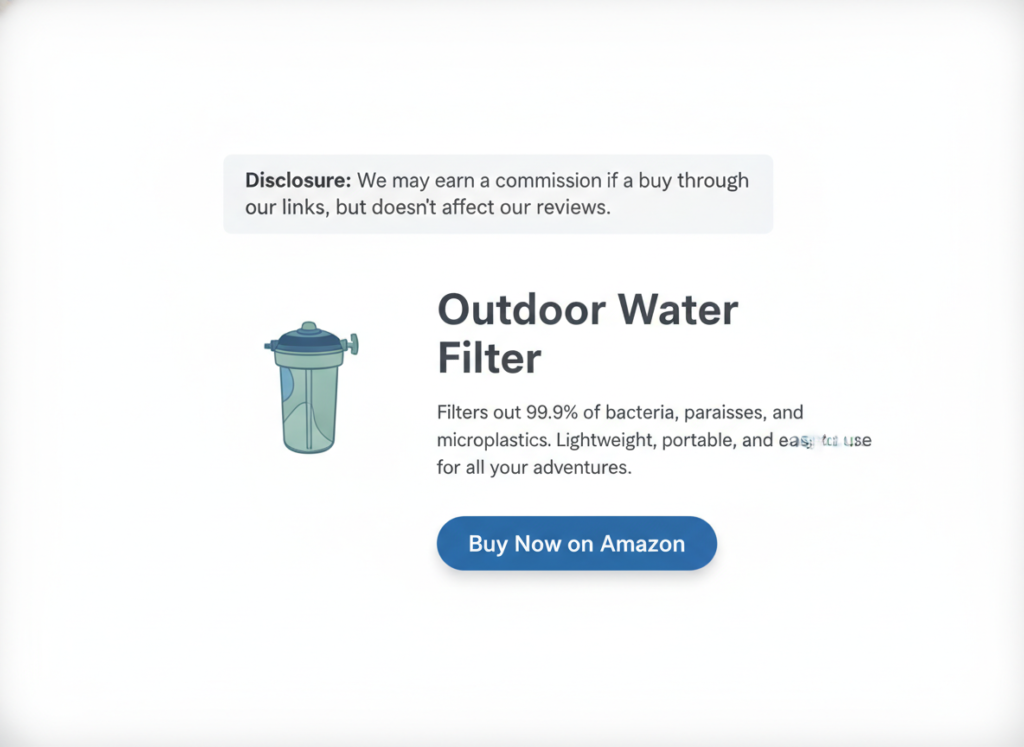
Words that may confuse readers
Terms such as “affiliate link,” “paid link,” “sponsored,” or “ad” may not mean the same thing to every person. “Affiliate link” is useful, but explain it. “I may earn a commission if you buy” is usually easier for a beginner to understand.
A label such as “partner” may sound friendly, but it does not always explain money or another material connection. Avoid words that make readers guess.
Strong disclosure formula: name the relationship, explain the possible benefit, and say whether the reader pays extra. Keep it short enough to read before the first link.
Where to Put Affiliate Link Disclosures by Content Format
The right place depends on the channel. The same disclosure may not work in a blog post, video, or short social media caption. Make the relationship clear in the content where the recommendation appears.
Blog posts, reviews, and comparison pages
Place a short affiliate disclosure near the top of the page, before the first affiliate link. You can also repeat a brief reminder before a comparison table or product button when the page is long.
Example: “We use affiliate links in this guide. If you choose a product through our links, Growthby10x may earn a commission at no extra cost to you.”
A site-wide affiliate disclosure page is useful for extra detail. It can explain your policies, partnerships, and review process. However, it should support, not replace, content-level affiliate link disclosures.
Email newsletters
Put the disclosure near the recommendation and before the affiliate link. Do not hide it only in the footer. A reader may view the email without scrolling to the bottom.
Example: “Some links in this email are affiliate links. We may earn a commission if you buy through them.”
Social media posts
Use a clear label in the post itself. Put it at the start or close to the recommendation. Hashtags such as #ad or #sponsored may help, but do not rely on a confusing group of tags.
Example: “Ad: This is an affiliate link, and I may earn a commission if you purchase.”
Make sure the disclosure is visible before a “link in bio” instruction. A separate landing page disclosure may not be enough if the social media post makes the endorsement.
YouTube videos and livestreams
Say the disclosure in the video before discussing the product or directing viewers to a link. Add a written disclosure in the description near the first affiliate link. For a long video, repeat it when the recommendation returns.
Example: “Some links below are affiliate links. If you buy through one, I may earn a commission at no extra cost to you.”
Podcasts and audio content
Say the relationship clearly before the recommendation. Audio listeners cannot see a written notice, so a description alone may not reach them.
Keep the spoken disclosure natural and specific. Do not rush through it or bury it in a long list of sponsor messages.
Other content formats
Use the same principle for courses, forums, chat communities, downloadable files, and mobile pages. Wherever readers encounter the endorsement, they should encounter the disclosure.

| Channel | Best placement | Useful action |
| Blog or review | Before the first affiliate link | Explain the commission in plain English |
| Near the recommendation | Repeat the notice before the link | |
| Social media | At the start of the post | Use a clear ad or sponsored label |
| Video or podcast | Before the endorsement | Say the notice and add written text |
Affiliate Link Disclosure Examples That Protect Trust
Your affiliate marketing disclosure does not need to sound like a contract. It should match the content, audience, and platform. The best examples are direct, honest, and short.
Simple blog disclosure
“This article contains affiliate links. If you buy through a link, we may earn a commission at no extra cost to you. We only recommend products we believe can help.”
Product review disclosure
“The company provided this product for review, and this page also contains affiliate links. We may earn money from a qualifying purchase. Our opinions are our own.”
Free product disclosure
“The brand gave us this product for free. That is a material connection, and it may affect how readers view this review. We will share both useful features and limits.”
Social media disclosure
“Ad: I may earn a commission if you buy through this affiliate link.”
Comparison page disclosure
“Some links in this comparison are affiliate links. If you choose an option through one of our links, we may receive a commission. Your price does not change.”
Weak wording to avoid
Vague wording can leave readers confused. Examples include “Thanks to our partners,” “This page may contain links,” “Paid partnership,” or “Shop our favorites.” These phrases may not tell people that you can earn money from their actions.
“Affiliate link” by itself may also be too technical for a broad audience. Add a short explanation. The goal is not to use the largest disclaimer. The goal is to give the important fact at the right time.
Helpful wording
- Names the affiliate relationship
- Explains a possible commission
- Uses ordinary words
- Appears before the link
Risky wording
- Uses unexplained legal terms
- Hides the message in a policy
- Appears after the purchase button
- Suggests an unrelated partnership
Turn the rule into a publishing habit
Before you recommend a product, write the disclosure first. Then place it above the first affiliate link and read it as if you were a new visitor.
How to Stay Transparent Without Hurting Conversions
Some creators worry that an affiliate disclosure will stop people from clicking. A hidden disclosure may create short-term clicks, but it can damage trust and create compliance problems. A clear message gives readers a fair choice.
Lead with value
Explain what the product does, who it may help, and where it may fall short. Readers are more likely to act when the recommendation answers their question. A disclosure then feels like part of your honest review, not a warning label.
Use a calm CTA
Match the action to the reader’s stage. Someone learning the rules may want to read official guidance. Someone comparing products may want to check features. Someone ready to choose may want to visit the product page.
Use phrases such as “See the current details,” “Compare the options,” or “Check whether this tool fits your needs.” These calls to action are more credible than pressure-based phrases.
Keep the disclosure close to the decision
Place the relationship notice before the relevant button or link. If a page contains several unrelated product groups, use a short reminder for each group. Readers should not have to scroll back to understand a new recommendation.
Show limits and alternatives
Trust grows when you explain who should not buy. Mention important costs, contract terms, limits, or setup work. Give readers a reasonable alternative when one exists.
Never claim that a product is the best for everyone. Never promise income, savings, approval, or results unless you can support the statement and the claim is allowed under the program rules.
CTA lessons from the ranking pages
The ranking results are led by educational articles. That means a hard sales CTA is unlikely to fit the search intent. A better pattern is a helpful resource link after the answer, followed by a related action for readers who want to go further.
For Growthby10x, the strongest conversion path is simple: explain the rule, show the wording, offer a checklist, and invite readers to review the official source. This supports both trust and useful engagement.
Common Affiliate Disclosure Mistakes to Avoid
A disclosure can fail when it is technically present but practically difficult to notice. Review the whole reader journey, from the first sentence to the final link.
1. Hiding the notice at the bottom
A footer or policy page may be easy for you to find, but many readers will not see it before clicking. Put the short affiliate disclosure near the first link.
2. Using confusing legal language
Long wording can hide the main point. Replace formal phrases with a direct explanation of the commission or other relationship.
3. Relying only on a privacy policy
A privacy policy explains data practices. It is not a substitute for an affiliate link disclosure. You may need both documents for different reasons.
4. Putting the notice after the CTA
Do not ask readers to “buy now” and explain the commission afterward. The relationship should be known before the decision point.
5. Disclosing one channel but not another
A blog notice does not automatically cover a video, email, or social media post. Add a suitable disclosure wherever the endorsement appears.
6. Forgetting free products and discounts
Money is not the only material connection. Gifts, free access, travel, employment, and special discounts may also need disclosure.
7. Making unsupported claims
A disclosure does not make a false claim acceptable. Check your facts, explain your experience, and avoid promises that cannot be proven.
8. Treating a site-wide page as enough
A website disclosure page can provide detail about partnerships and review practices. Still, each post should give readers the key information where they need it.
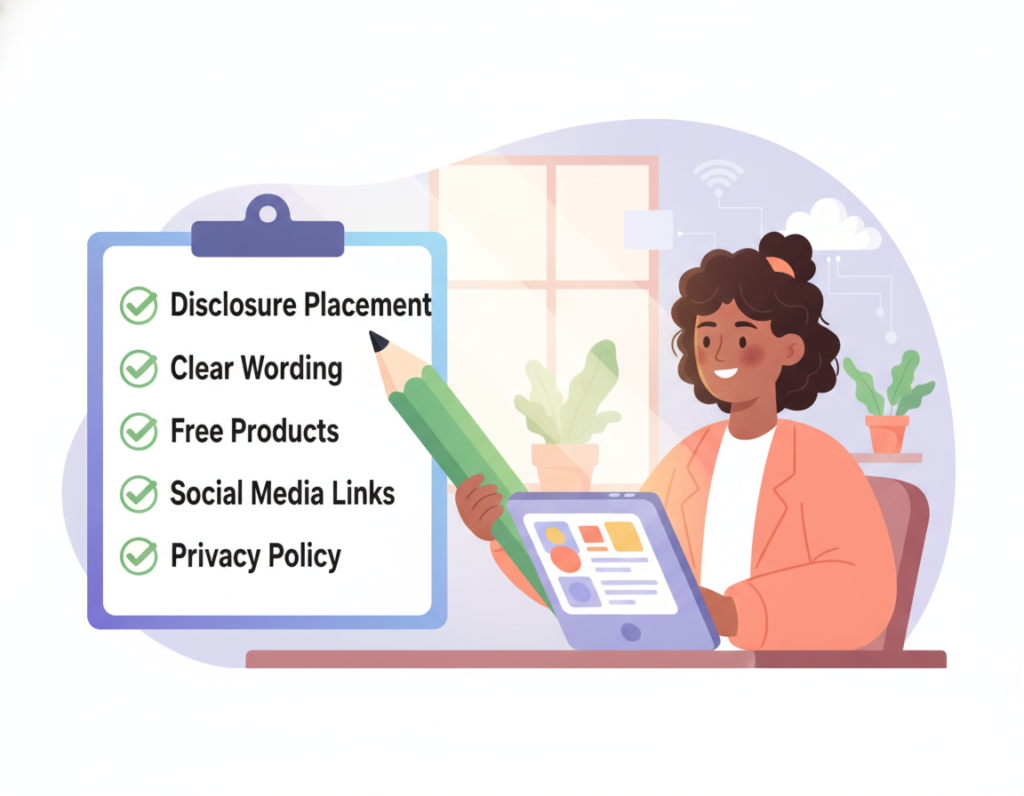
Affiliate Link Disclosure Pre-Publishing Checklist
Use this checklist every time you publish affiliate content. It takes a few minutes and can help you catch problems before readers see the page.
- List every affiliate link, paid partnership, free product, gift, discount, or other material connection in the content.
- Write a short affiliate disclosure in plain English.
- Place the notice before or near the first related affiliate link.
- Check that the text is readable on a phone and desktop screen.
- Explain what may happen, such as earning a commission after a qualifying purchase.
- Tell readers whether the commission changes their cost, if that statement is accurate.
- Use the same level of clarity in the post, email, video, podcast, and social media version.
- Check whether the platform, affiliate program, industry, or location has extra guidelines.
- Review product claims, prices, availability, refund terms, and performance statements.
- Place the CTA after the disclosure, not before it.
- Keep a record of the relationship and the date you reviewed the wording.
- Update old posts when partnerships, products, rules, or links change.
A quick reader test
Ask a friend who does not work in affiliate marketing to read the first screen of the page. Can that person answer three questions?
- Does the creator have a relationship with the brand?
- Could the creator earn money or receive another benefit?
- Does the relationship appear before the reader makes a purchase decision?
If the answer is no, rewrite the disclosure. A short, clear sentence is usually better than a long disclaimer that readers skip.
Keep a separate policy page
Create a site-wide policy page when your business uses affiliate partnerships often. Explain how commissions work, how you choose products, and how readers can contact you about a concern.
Use the page for extra information, not as the only notice. Each post, page, or message still needs a nearby affiliate link disclosure when it includes an endorsement.
FAQs and Final Steps for Legal Affiliate Disclosure
Do I need an affiliate disclosure if the reader pays nothing extra?
Usually, the reader’s cost is not the only issue. If you may earn a commission, explain that connection. You can also say that the reader’s price does not increase when that is true.
Is “affiliate link” enough by itself?
It may not be enough for every audience. Add a plain explanation, such as “We may earn a commission if you buy through this link.” This helps people who do not know affiliate marketing terms.
Can I put the disclosure in my website footer?
A footer can provide extra policy information, but it should not be your only affiliate disclosure. Put a clear notice near the first affiliate link and near important recommendation areas.
Should I disclose a product that a company sent for free?
A free product can create a material connection. Tell readers that you received it for free. Also give your honest opinion and explain meaningful limits.
Do social media posts need affiliate link disclosures?
They may. Add a clear notice in the post, story, caption, or video where the recommendation appears. Do not assume that a disclosure on your website will cover every social media post.
Can a disclosure ruin my conversions?
A clear disclosure may change how some people respond, but hiding the relationship creates bigger trust and compliance risks. Lead with useful information, make honest recommendations, and place a calm CTA after the notice.
What is the safest wording for every business?
There is no single sentence that fits every situation. A useful starting point is: “This content contains affiliate links. We may earn a commission if you buy through them, at no extra cost to you.” Adjust it for free products, paid partnerships, and platform rules.
How to disclose affiliate links legally: the practical answer
To disclose affiliate links legally, explain the relationship in plain language before or near the first affiliate link. Make the text easy to notice. Repeat it in each channel where the recommendation appears. Include commissions, free products, discounts, and other material connections.
Then make your content worth trusting. Recommend products you can stand behind. Share useful details, limits, costs, and alternatives. Put every sales or product CTA after the reader understands the relationship.
Publish with clarity and confidence
Use the checklist above, review the current Federal Trade Commission guidance, and check the rules for your industry, platform, location, and audience before publishing.
Honest affiliate marketing is not about hiding the commission. It is about making the relationship clear so readers can choose with confidence. That approach gives your business a stronger foundation for useful content, responsible growth, and lasting trust.
Disclaimer: Laws, regulations, and platform policies can change. This article is general educational information, not legal advice. Obtain qualified legal advice for guidance about your specific situation.