
The supplied SERP sources indicate three different conversion models. Improvado is a B2B marketing resource, so its likely CTA path is a product or service demo, consultation, or contact request. ReferralCandy is a B2B affiliate marketing guide that can move readers toward a platform trial or partner action. Metricool is a practical marketing guide that naturally supports a free account, tool registration, or product exploration. Because the source HTML was not supplied, these CTA findings are directional rather than a claim about every live-page element.
The competing pages appear to serve mostly cold and warm readers. They teach first, then connect the lesson to a relevant marketing tool. The strongest model for this article is an informative guide with native, low-pressure CTAs. Readers should first receive useful Pinterest steps, then see optional tools, checklists, and measurement resources.
- Teach before asking. Match the helpful format used by strong marketing education pages.
- Use action-led button copy such as “Build Your 30-Day Pin Plan” instead of vague text such as “Click here.”
- Place a relevant CTA after a complete idea, not inside the first paragraph.
- Use one primary action per CTA block. Too many choices can reduce clicks.
- Pair affiliate links with honest context, disclosure language, and a reason the tool may help.
- Use a free checklist or email subscription for cold readers and a tool registration CTA for warm readers.
- Keep claims realistic. Do not promise guaranteed traffic, earnings, rankings, or conversions.
- Use buttons for high-value actions and natural text links for supporting resources.
Pinterest can help you turn one useful article into months of helpful visits. You create a Pin, connect it to strong content, and let people find it through search. This guide shows you how to build that system in simple steps.
Why Pinterest can send steady traffic in 2026
Pinterest is more than a social media platform. It is also a visual search engine. Users often arrive with a plan. They may want a recipe, a gift, a product, a room idea, or a solution to a problem.
That intent makes Pinterest useful for affiliate marketing. A good Pin can appear when someone searches for an answer. The Pin can then send that user to a helpful website page. If the page recommends a suitable product, the reader may use an affiliate link.
This process is different from a fast-moving feed. A post on some platforms may receive most of its attention in a day. Pinterest content can continue appearing for much longer. Results vary by niche, design, keywords, season, and content quality.
In 2026, users also expect useful and clear visual content. They do not want misleading headlines. They want quick answers, honest reviews, and products that fit their needs. Your Pinterest marketing should serve that expectation.
A simple path connects Pinterest search, helpful content, and relevant product recommendations.
Image placement: Use near the introduction to explain the traffic journey.
Start with a simple traffic plan
Write down one audience problem, one helpful page, and one product category before you design your first Pin.
What evergreen affiliate traffic means
Evergreen affiliate traffic is visitor flow that can continue after you publish content. It is not tied only to a holiday, news event, or short trend. Examples include “best desk lamps for small rooms,” “how to choose a beginner camera,” and “simple tools for meal planning.”
When a reader visits your page through Pinterest and buys through your disclosed affiliate link, you may earn a commission. The program decides the rate, tracking period, and payment rules. You do not control those terms.
Evergreen does not mean permanent. Products change. Prices move. Links break. Search behavior shifts. You need to review your content and Pins so the information stays accurate.
- Choose problems people will still have next year.
- Recommend products that solve those problems clearly.
- Update prices, features, availability, and links.
- Keep your Pin promise aligned with the page experience.
This model works best when trust is your main asset. A useful page can support both the reader and your affiliate marketing goals.
Why Pinterest is valuable for affiliate marketing in 2026
Pinterest combines discovery, search, and visual inspiration. That combination can help smaller websites reach users who are already exploring an idea.
The platform is especially useful for products that can be shown or compared. Home items, clothing, crafts, travel tools, fitness products, software, and digital products may all work. Your results depend on the target audience and the quality of your content.
Search engines also value useful websites, clear organization, and strong user experience. Pinterest cannot replace search engine optimization. It can add another way for people to discover your website.
Discovery
Users find visual ideas while they explore a need.
- Strong images
- Clear headlines
- Useful search terms
Consideration
Your page helps users compare choices and make a decision.
- Pros and cons
- Simple explanations
- Honest product fit
Action
A clear affiliate link gives the reader a next step.
- Visible buttons
- Transparent disclosure
- Accurate product details
Choose a profitable niche and suitable products
A profitable niche is not only a topic with popular products. It is a group of people with repeat questions and a clear reason to buy. Start with the person, not the commission rate.
Define your target audience
Ask who you want to help. A broad group such as “people who like fitness” is hard to serve. A clearer group might be “busy parents who want short home workouts.” You can then create content around their time, budget, and needs.
Check product fit before applying
- List common questions in the niche.
- Find products that answer those questions.
- Compare quality, price, reviews, and support.
- Read the affiliate program terms.
- Check whether the product is available to your audience.
Do not promote a product only because it pays well. If it disappoints readers, your brand will suffer. A smaller commission from a trusted product may be more valuable than a large commission from a poor one.
Choose products by audience fit, usefulness, trust, and program terms.
Image placement: Add after the product-selection checklist.
Build and optimize your Pinterest business account
Use a business account for a professional Pinterest profile and access to Pinterest Analytics. Complete the account before you publish a large batch of Pins.
- Choose a clear profile name related to your niche.
- Write a short profile description with relevant keywords.
- Add your website and verify it when possible.
- Use a simple profile image that matches your brand.
- Create boards based on real user searches.
- Keep board names specific and easy to understand.
Your Pinterest boards should help users move through related topics. For example, a small home office brand might use boards named “Small Desk Ideas,” “Home Office Lighting,” and “Budget Office Tools.” Avoid stuffing every board with unrelated content.
Make your account useful even before a visitor clicks to your website. A clear profile builds confidence and helps users understand what they will find.
Set up your business account today
Complete your profile, verify your website, and create three boards that match the questions your audience asks.
Use Pinterest keywords and search intent
Pinterest search begins with words. Use Pinterest search suggestions to discover how users describe a topic. You can also review related results, competitor Pins, customer questions, and search engine suggestions.
Place relevant keywords naturally
- Profile name and description
- Board names and board descriptions
- Pin titles
- Pin descriptions
- Article headings and page copy
- Image text when it remains easy to read
Do not repeat the same phrase in every sentence. Use natural variations such as Pinterest affiliate marketing, evergreen traffic, affiliate content, product guide, and comparison article.
Match the searcher’s goal
A search for “best walking shoes” shows product research intent. A search for “how to clean walking shoes” shows an information need. Both can support affiliate marketing, but the page and CTA should differ.
Use a tutorial CTA for an information search. Use a comparison or retailer CTA for a product search. This alignment can improve user trust and reduce unwanted clicks.
Create Pins that earn qualified clicks
Your Pin has one main job: earn enough attention for the right user to understand the promise. It does not need to explain the entire article. It needs to make the next step clear.
Use a strong visual layout
- Use a vertical format that is easy to view on a phone.
- Keep the headline large and short.
- Use strong contrast between text and background.
- Show the product or the result when suitable.
- Leave enough space around the main idea.
- Use consistent colors so users recognize your brand.
Write a useful Pin headline
A strong headline states the benefit without making a false promise. Try “7 Quiet Fans for Small Bedrooms” instead of “The Only Fan You Need.” The first headline is specific. The second sounds extreme.
Create several designs for the same page. Change the angle, image, or headline. Do not make tiny changes only to flood the platform. Each Pin should offer a distinct presentation and follow current Pinterest rules.
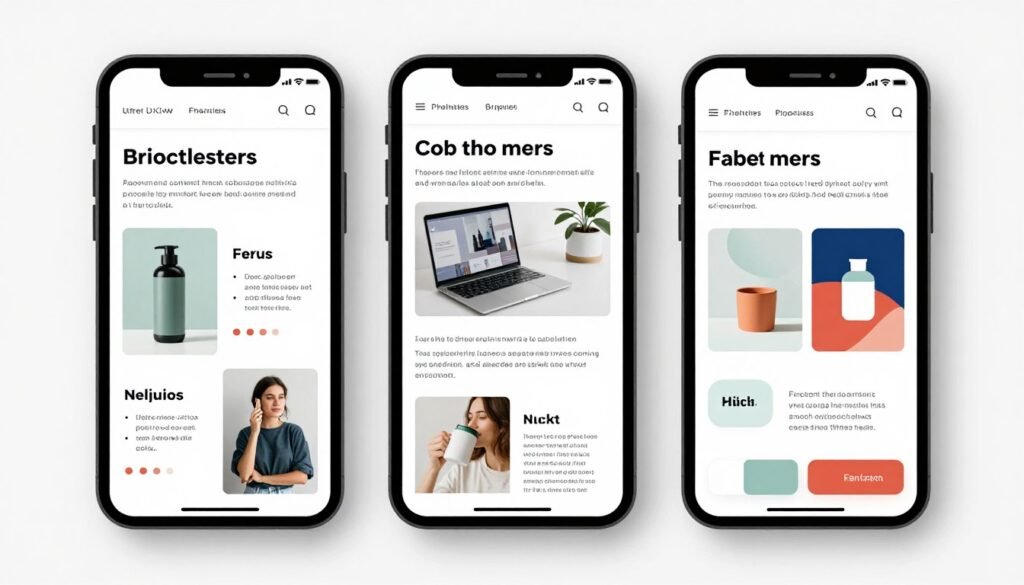
Use clear visual promises that match the page behind each Pin.
Image placement: Show after the design and headline guidance.
Connect Pins to helpful affiliate content
A Pin should lead to a page that keeps its promise. This is one of the most important parts of affiliate marketing on Pinterest. A beautiful Pin cannot fix a thin or confusing page.
Choose the right page type
- Best for several related products
- Explain who each product suits
- Include clear comparison points
Roundup
- Best for a step-by-step problem
- Show how a product fits the process
- Use helpful affiliate links naturally
Tutorial
- Best for a product under consideration
- Discuss limits as well as benefits
- State how you tested or researched it
Review
Place affiliate links where they help the reader. A button near a product summary can work well. A text link inside a useful explanation can also feel natural. Do not hide the fact that a link may earn you a commission.
Use a short disclosure near the first affiliate link. Add a fuller disclosure on the website if required by your program or local rules. Review Federal Trade Commission guidance and the terms of every affiliate network you use.
Turn one idea into a useful page
Choose a roundup, tutorial, review, or comparison format. Then write for the reader’s decision, not only for the affiliate link.
Build evergreen content that stays useful
Evergreen content answers a need that does not disappear quickly. It can still include current details. In fact, regular updates make it stronger.
Use a content group
Create one main guide and several supporting pages. A main guide might cover “simple home office upgrades.” Supporting pages could cover desk lamps, chairs, cable tools, and storage. Each page can have its own Pins and search terms.
Link related pages together. This helps users find more answers and helps search engines understand your website structure. Keep the links useful. Do not force a link where it does not belong.
Refresh your pages on a schedule
- Check affiliate links every month.
- Review product availability each quarter.
- Update old screenshots and prices.
- Replace products that no longer fit the audience.
- Refresh Pin designs when the content changes.
This system supports long-term Pinterest marketing because you are building a library of relevant content, not chasing one short-lived trend.
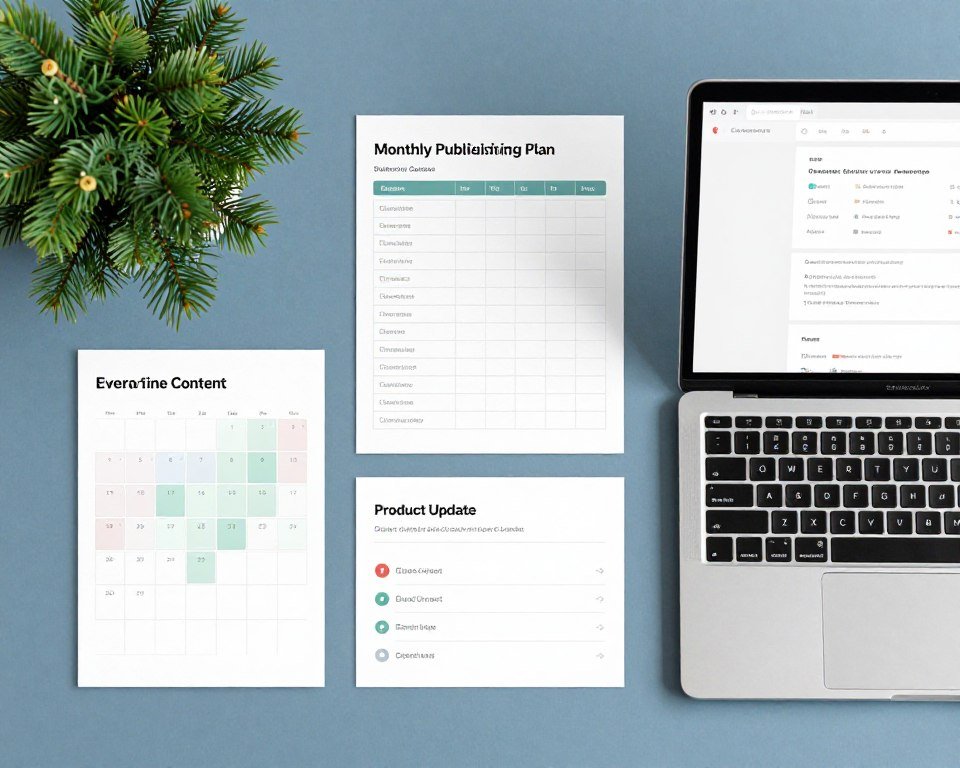
A content calendar helps you publish consistently and refresh old pages.
Image placement: Place beside the evergreen content workflow.
Follow this Pinterest affiliate marketing workflow
You do not need a large team to begin. Use a repeatable process that protects quality.
- Choose one audience problem. Start with a question that has clear practical value.
- Research search language. Collect relevant keywords from Pinterest search, customer comments, and competing pages.
- Select a suitable product group. Check quality, price, availability, commission terms, and audience fit.
- Publish the helpful page first. Add original advice, clear headings, product details, limitations, and disclosures.
- Design three to five Pin concepts. Give each concept a different headline or visual angle.
- Optimize every Pin. Add a clear title, useful description, relevant keywords, and the correct destination URL.
- Publish on a steady schedule. Start with a pace you can maintain without lowering quality.
- Review the data. Find which Pins earn saves, outbound clicks, and useful website behavior.
- Improve one variable at a time. Test the headline, image, page opening, or CTA so you can learn what changed.
For example, imagine a creator who helps renters build small workspaces. She publishes a guide about compact desks, creates Pins for “small desk setup,” “renter office ideas,” and “budget desk accessories,” and connects each Pin to a detailed article. After several weeks, she notices that comparison Pins earn more outbound clicks than inspiration Pins. She creates more comparison content and updates the product details. That is a practical improvement loop, not a promise of guaranteed income.
Publish consistently and repurpose responsibly
There is no universal number of Pins that guarantees results. A beginner may start with three to five quality Pins each week. A larger content team may publish more. Your schedule should fit your time and your ability to create original visual content.
Repurposing is useful when it adds a new angle. Turn one article into a checklist Pin, a comparison Pin, a problem-solution Pin, and a seasonal Pin. Keep each design relevant to the linked section or page.
Avoid copying another creator’s images, product photos, or writing. Check image licenses and affiliate program rules. If a product owner provides approved creative assets, follow the stated conditions.
Simple rule: Repurpose the idea, not someone else’s creative work. Every Pin should offer a clear reason to visit the linked page.
Use Pinterest Analytics to measure real performance
Pinterest Analytics can show how users interact with your account and Pins. Impressions tell you how often content appeared. Saves suggest that users found the idea useful. Outbound clicks show visits from Pinterest to your website.
Do not judge a Pin by impressions alone. A Pin can be seen often but earn few clicks. Review the full path from search to page to affiliate action.
| Metric | What it shows | What to improve |
| Impressions | How often a Pin appeared | Keywords, topic fit, and design |
| Saves | How often users saved the Pin | Usefulness and visual appeal |
| Outbound clicks | Visits to your website | Headline, promise, and CTA |
| Conversions | Affiliate actions or sales | Product fit, trust, and page quality |
Use tracking parameters when your analytics setup supports them and when the affiliate program allows them. Record the Pin URL, article URL, date, topic, and result. This simple performance tracking system helps you find patterns.
If impressions are low, review keywords and topic demand. If impressions are high but clicks are low, improve the Pin promise. If clicks are high but affiliate results are low, review page speed, product fit, disclosure placement, and the strength of your comparison.
Measure before you change everything
Create a small tracking sheet for impressions, saves, outbound clicks, page visits, and affiliate results. Review it once a week.
Avoid mistakes that reduce reach and trust
Common Pinterest mistakes
- Sending every Pin to a general homepage.
- Using vague headlines that hide the page topic.
- Promoting products unrelated to the Pin.
- Publishing copied or low-quality visual content.
- Ignoring mobile readability.
- Using too many hashtags or unrelated keywords.
- Making income claims that cannot be supported.
- Failing to update broken affiliate links.
- Measuring vanity metrics without checking clicks.
Follow rules and protect your brand
Read the latest Pinterest rules before using affiliate links directly on Pins. Some programs may have extra requirements. Rules can change, so confirm current guidance instead of relying on an old blog post.
Disclose affiliate relationships in clear language. A reader should understand that you may receive compensation if they buy through a link. Place the disclosure where it is easy to notice.
Use your own designs or properly licensed visual content. Do not remove watermarks or copy product photography without permission. Respect trademarks, copyright, privacy, and advertising rules.
Trust grows when you explain who a product suits and who should skip it. Balanced advice may reduce a few clicks, but it can improve the quality of your audience and protect your long-term brand.
Build CTAs that match the Pinterest reader journey
The best CTA depends on what the reader knows. A cold visitor may not be ready to buy. A warm visitor who just read a comparison may be ready to review product options.
Cold reader
Offer a helpful checklist, tutorial, or email subscription. Keep the action low risk.
- “Get the Pin planning checklist”
- “Read the beginner guide”
Warm reader
Offer a comparison, product guide, or relevant online tool.
- “Compare the top options”
- “See the current tool features”
Ready reader
Make the next product action clear while keeping the affiliate disclosure visible.
- “Check today’s product details”
- “View the official offer”
Use CTA buttons for important actions. Use in-text affiliate links when the link is part of a natural explanation. Avoid aggressive language such as “Buy now or lose out” unless a verified, time-limited offer truly exists.
Competitor marketing pages commonly use tool-led CTAs because a relevant tool makes the next step easy. For this article, the strongest mix is a free planning resource for cold users and a transparent tool or product link for warm users.
Take your next steps with Pinterest affiliate marketing
Start small. Choose one audience, one evergreen problem, one helpful article, and one suitable product group. Set up your business account and create boards that reflect real Pinterest search behavior.
Then publish useful Pins with honest headlines. Connect every Pin to content that answers the promise. Add clear disclosures. Track impressions, saves, outbound clicks, and affiliate results.
Give the system time to teach you. Improve the pages and Pins that attract the right users. Remove weak products. Keep learning from Pinterest Analytics and current platform rules.
Leveraging Pinterest for Evergreen Affiliate Traffic in 2026 is not about chasing a shortcut. It is about building a useful content library that helps people make better choices. When your content serves the reader first, qualified traffic and affiliate opportunities have a stronger foundation.
Create your first 30-day Pinterest plan
Pick one niche, publish one helpful page, design three original Pins, and review your first performance data at the end of the month.