
You can promote the same product through email or a blog. Yet the two channels work in very different ways. Email reaches people who already know you. A blog can reach people who are still searching for answers.
In this guide, you will compare both channels in simple terms. You will also learn how to choose a channel, place affiliate links, write honest calls to action, and measure real revenue.
What the Top SERP Pages Do Well
The leading pages for this topic follow a clear pattern. They teach first and sell second. Their CTAs appear after the reader understands the problem, which makes the next action feel useful rather than forced.
Digistore24
The article focuses on email affiliate marketing. Its goal is to inform readers and connect them with affiliate offers, tools, or platform actions.
- Audience: B2C creators and affiliate beginners.
- CTA style: native links and product-related prompts.
- Action: explore offers, tools, or affiliate programs.
impact.com
The article explains blog monetization for bloggers. It speaks to readers who want to turn content and partnerships into revenue.
- Audience: creators, publishers, and small businesses.
- CTA style: educational prompts and partnership links.
- Action: learn more, join, or explore a platform.
Smartlead.ai
The article targets marketers who want to use email to promote affiliate products. The likely commercial path leads toward email software and related tools.
- Audience: marketers and growing teams.
- CTA style: tool-focused links and trial prompts.
- Action: test software, register, or improve outreach.
Competitive insight: The best CTA for your article should not ask every reader to buy. It should offer the next sensible step for the reader’s current level of interest.
Email or Blog: Which Channel Wins?
For most beginners, a blog is better for finding new people. Email is better for building repeated contact with people who already trust you. This means neither channel wins in every case.
A blog can create organic traffic for months or years. Email can create faster clicks when your list is active. The strongest affiliate marketing strategy uses both channels together.
Start With the Channel You Can Maintain
Choose one clear topic, publish helpful content, and build a permission-based email list as you grow.
How Email Affiliate Marketing Works
Email marketing begins with permission. A visitor gives you an email address through a useful free offer, such as a checklist or short guide. You then send helpful emails to that subscriber.
Over time, you can recommend products that solve the reader’s problem. Your email may explain the product, show how to use it, and include an affiliate link. If the reader buys, you may receive a commission.
Why email can drive quick action
- Your message arrives in the subscriber’s inbox.
- You can speak to a known audience.
- You can send follow-up emails.
- You can group subscribers by interest.
- You can test subject lines and offers.
Email does not mean sending sales messages every day. Too many promotions can reduce trust. A useful email list needs a healthy mix of teaching, stories, examples, and offers.
How Blog Affiliate Marketing Works
A blog answers questions that people type into search engines. A reader may find your article while comparing products, fixing a problem, or looking for a beginner guide.
You can place affiliate links inside product reviews, tutorials, comparison posts, and resource pages. The link should fit the sentence. It should help the reader take the next step.
Why a blog can create long-term traffic
- Search traffic can bring new readers every day.
- One useful article can support many affiliate links.
- Readers can share helpful content on social media.
- Your content can answer questions before a sales call.
- You own the page and can update it.
A blog usually takes longer to grow. You must choose topics, create quality content, improve search visibility, and earn reader trust. Results may also change when search engines update their systems.

Email vs. Blog: A Simple Comparison
The right channel depends on your audience, content skills, time, and offer. Use this table as a starting point, not as a promise of fixed results.
| Factor | Blog | |
| Reach | Reaches subscribers you already have. | Can reach new people through search. |
| Trust | Often personal and direct. | Built through useful, detailed content. |
| Speed | Can create clicks soon after sending. | Usually needs time to gain traffic. |
| Cost | Needs an email platform and list tools. | Needs hosting, content, and SEO work. |
| Control | Depends on deliverability and inbox rules. | You control the page and updates. |
| Growth | Grows through subscribers and referrals. | Grows through search and social media. |
| Best use | Follow-up and repeat offers. | Discovery and evergreen education. |
Reach, Trust, and Audience Quality
A blog is usually stronger at reaching cold traffic. These readers may not know your name. They are looking for a solution, so a clear article can earn their attention.
Email is usually stronger with a warm audience. Subscribers have already taken a small action by joining your list. That action does not guarantee a sale, but it gives you a chance to build a relationship.
Audience quality matters more than audience size. One hundred interested subscribers may produce more affiliate revenue than ten thousand readers who do not need the product.
Build trust in both channels
- Explain who the product helps.
- Share limits and possible drawbacks.
- Use examples that match real life.
- Do not hide affiliate relationships.
- Give readers a useful answer before the link.
Speed, Cost, and Traffic Sources
Email can be fast once you have a list. You can write an email today and see clicks soon after it reaches the inbox. However, building that list takes time and may require software.
A blog can begin with a small budget. You may pay for hosting, a domain, design tools, and content support. The larger cost is your time. Search traffic can be free to receive, but earning it requires consistent work.
Paid ads can send traffic to a blog or landing page quickly. They can also spend money quickly. Do not use paid ads for an affiliate offer until you understand your tracking, commission, and advertising rules.
Email strengths
- Fast distribution to subscribers.
- Personal follow-up.
- Clear testing data.
- Strong repeat contact.
Email limits
- You need permission and list growth.
- Messages may miss the inbox.
- Weak offers can cause unsubscribes.
- List tools can add monthly costs.
Search Visibility and Content Control
Blog content can appear when people search for terms such as “best tools for beginners” or “how to start affiliate marketing.” This makes a blog useful for discovery.
Good search content answers one clear question. It uses simple headings, original examples, useful links, and accurate information. It also needs updates when products, prices, or affiliate programs change.
Email has less search visibility. A private message cannot usually bring new people from Google. Yet email gives you more control over the order and timing of your content.
Conversion Rates and Natural Affiliate Links
Affiliate conversion rates vary by product, audience, price, page quality, and timing. You cannot assume that email always converts better than a blog. You must measure your own audience.
Email may produce a higher click rate because the reader knows you. A blog may produce stronger buying intent when the reader is comparing products. Both outcomes are possible.
Place links where they help
- Link to a product after explaining its use.
- Use descriptive text instead of “click here.”
- Give one clear action near a comparison.
- Use buttons for important next steps.
- Check that affiliate links work on mobile.
Make Your Next Click Useful
Compare the tool, offer, or program against the reader’s real need before asking for action.
Use an affiliate disclosure near the first commercial recommendation. A simple statement works: “This article may contain affiliate links. If you buy through one, we may earn a commission at no extra cost to you.”
Control, Content, and Scalability
Email scales through automation. You can create a welcome series, a product education series, and follow-up messages. Each new subscriber can move through the same helpful path.
A blog scales through a content library. One article can support other articles through internal links. It can also create a home for reviews, tutorials, email forms, and product comparisons.
The risk is spreading yourself too thin. A small creator does not need five channels at once. Start with one main content channel and one supporting channel.
- You already have interested subscribers.
- Your product needs follow-up education.
- You can send helpful messages each week.
- You want repeat affiliate sales.
Choose email first when
- You need new organic traffic.
- You enjoy writing useful guides.
- Your topic has clear search questions.
- You want an evergreen content asset.
Choose a blog first when
Why Email and Blog Work Better Together
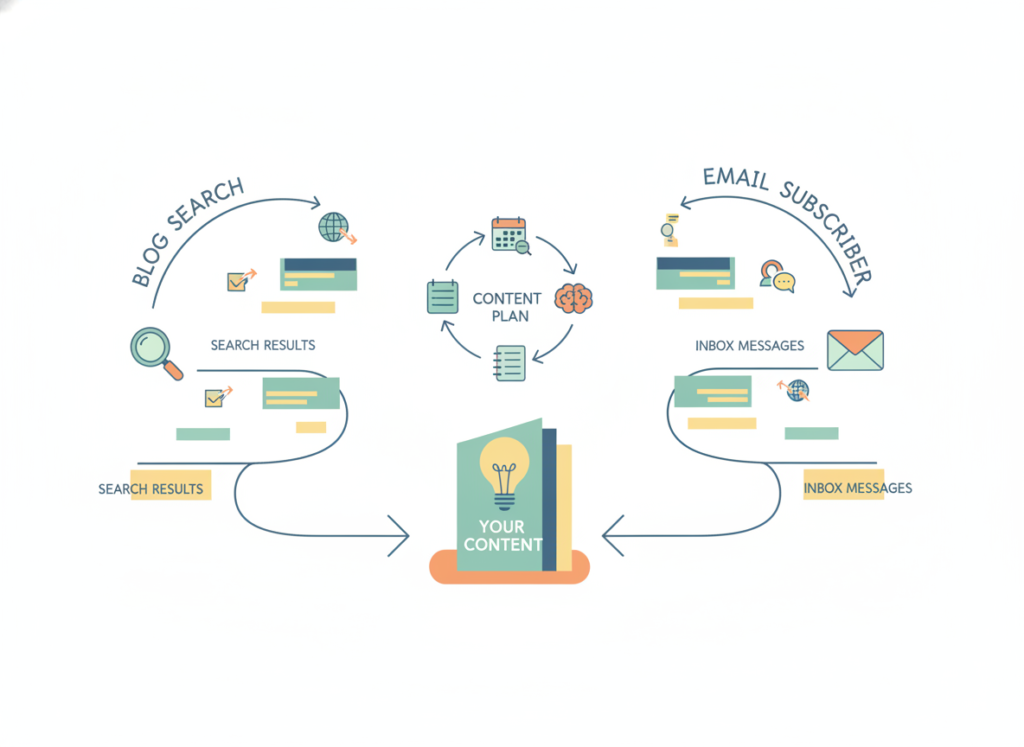
A blog can attract the reader. An email list can help you continue the conversation. This creates a simple path from discovery to trust to action.
For example, you could publish a guide about beginner budgeting software. The article can explain the choices and include a helpful affiliate link. It can also offer a free checklist in exchange for an email address.
After the reader joins, your emails can answer common questions. Later, you can share a product comparison or a limited-time offer. Every message should remain relevant to the original reason for joining.
A simple content loop
- Find a real question from your audience.
- Publish a clear blog answer.
- Offer a related checklist or guide.
- Welcome the new subscriber.
- Teach before making an offer.
- Review the data and improve the content.
CTA Strategies That Match Search Intent
Readers searching for this topic are comparing channels. They are not all ready to buy. Your CTA should match that intent.
For cold readers
Offer a beginner checklist, channel worksheet, or simple email course. This is a low-risk action.
For warm readers
Recommend a relevant tool or affiliate program after showing how it solves a clear problem.
For ready readers
Use a direct button that explains the action, such as starting a trial or comparing program terms.
Use clear subject lines in email. “Three tools for your first blog” is more useful than “Big news.” On a blog, use buttons such as “Compare the features” or “See the current offer.” Never hide the destination.
How to Measure Affiliate Performance
Do not judge a channel by clicks alone. A click has value only when it creates a useful result, such as a lead, sale, or qualified subscriber.
Key numbers to review
- Open rate: How many delivered emails were opened.
- Click-through rate: How many people clicked a link.
- Conversion rate: How many visitors completed the desired action.
- Revenue per visitor: Total commission divided by visitors.
- Earnings per click: Commission divided by tracked clicks.
- List growth: New subscribers minus unsubscribes.
Use tracking links that identify the channel, article, email, and campaign. Review results after enough traffic arrives. A tiny sample can create misleading rates.
A Step-by-Step Plan for Beginners
You do not need a complex funnel on day one. Use this practical plan to build a foundation.
- Pick one audience. Choose a group with a clear problem, such as new freelancers who need simple accounting software.
- Choose one product category. Study the product, commission rules, refund terms, and affiliate program policy.
- Build a useful blog base. Publish three answers, one comparison, and one beginner tutorial.
- Add an email form. Offer a short checklist that directly supports the article topic.
- Write a welcome series. Send a welcome email, a teaching email, a case example, and a relevant recommendation.
- Use honest affiliate links. Explain why the product may help and who may not need it.
- Test one CTA. Change one element at a time, such as button wording or link placement.
- Review performance. Check traffic, subscribers, clicks, conversions, and revenue each month.
Common Mistakes That Reduce Affiliate Sales
Many creators add affiliate links before earning trust. This makes the article feel like an advertisement. Start with the reader’s problem and give a useful answer first.
- Using too many links on one page.
- Promoting products unrelated to the topic.
- Writing vague product claims.
- Ignoring mobile readers.
- Failing to test tracking links.
- Sending emails without permission.
- Using misleading subject lines.
- Ignoring program rules and disclosures.
Also avoid promising guaranteed income. Affiliate marketing can create revenue, but results depend on quality, demand, traffic, trust, and consistent work.
Frequently Asked Questions
Is email better than a blog for affiliate sales?
Email can create faster action from a warm audience. A blog can bring more new readers over time. Your best channel depends on your audience and offer.
Can I do affiliate marketing without an email list?
Yes. You can use a blog, social media, or approved paid ads. Still, an email list gives you a direct way to follow up, so it is useful to build one over time.
How many affiliate links should a blog post have?
Use as many as help the reader, but avoid filling every paragraph with links. A few clear links placed near relevant advice are often easier to trust.
What should an affiliate email include?
Start with a useful lesson or problem. Explain the product in plain language, mention important limits, disclose the relationship, and give one clear next action.
Which metrics matter most?
Track clicks, conversion rate, revenue per visitor, earnings per click, and total affiliate earnings. For email, also watch open rates, click-through rate, and unsubscribe rate.
The Best Channel Is the One You Can Build Consistently
Email and blogging serve different jobs. A blog helps new people find you. Email helps you stay connected with interested subscribers. Together, they create a stronger affiliate marketing system.
If you are starting from zero, publish useful blog content and add a simple email list. Test one relevant affiliate offer. Measure the full path from visitor to subscriber to sale.
Keep your CTAs clear, honest, and helpful. When each link gives the reader a sensible next step, you can grow trust, improve conversions, and build affiliate revenue with confidence.