
Opening a neighborhood gaming center requires balancing capital investments against predictable hourly usage and secondary retail purchases. A well-constructed gaming lounge business plan demonstrates that long-term profitability relies on driving steady customer foot traffic during off-peak hours while capturing high retail margins through food, drink, and competitive tournament entries.
Your local market conditions, electrical infrastructure, and commercial lease terms dictate whether your concept will generate sustainable net income. GrowthBy10x evaluates the core metrics, cost structures, and operational decisions that transform a love for video games into a viable commercial enterprise.
Evaluating Feasibility and Local Customer Demand
Before committing capital to physical real estate, you must determine whether your target territory contains enough active players to sustain daily operations. A small-scale lounge typically serves casual PC gamers, console enthusiasts, collegiate competitors, and youth seeking social multiplayer experiences away from home.
Conducting competitive analysis involves cataloging not only other local esports venues, but also comic shops, university student centers, board game cafes, and entertainment complexes. If nearby competitors focus purely on arcade games, a focused PC gaming venue equipped with low-latency fiber internet creates an immediate market distinction.
Local demographic density around community colleges, secondary schools, and transit corridors provides the foundation for steady weekday traffic and organic player communities.
Examine neighborhood spending habits, pedestrian volume, and local youth recreation options. When you identify an underserved pocket of enthusiasts who lack access to top-tier hardware or desire a social hub, your commercial concept gains a clear path toward sustainable customer acquisition.
Location Selection and Square Footage Requirements
Selecting an appropriate commercial storefront demands evaluating pedestrian foot traffic, dedicated parking spaces, and specialized utility capacity alongside standard rental rates. A small-scale operation hosting twenty to thirty gaming stations typically requires between twelve hundred and two thousand square feet of usable commercial floor area.
Cooling capacity and electrical distribution represent significant physical constraints that many first-time founders underestimate during site tours. Gaming rigs, high-refresh displays, network switches, and commercial lighting generate substantial heat loads that quickly overwhelm residential-grade heating, ventilation, and air conditioning systems.
- Check that incoming electrical panels supply sufficient dedicated circuits to prevent breakers from tripping during peak station usage.
- Inspect HVAC tonnage to confirm the building can offset continuous thermal output from dozens of simultaneous computing rigs and energetic patrons.
- Verify commercial zoning classifications to avoid zoning appeals that delay public openings and drain launch capital.
- Assess proximity to public transit stops and high-density student housing to encourage spontaneous walk-in visits.
Negotiating your commercial lease requires separating base rent from common area maintenance fees, property taxes, and building insurance charges. Securing several months of tenant improvement allowances or rent abatement assists in preserving working capital while contractors complete electrical drops, soundproofing, and accessibility renovations.
Gaming Stations, Networking, and Depreciation Economics
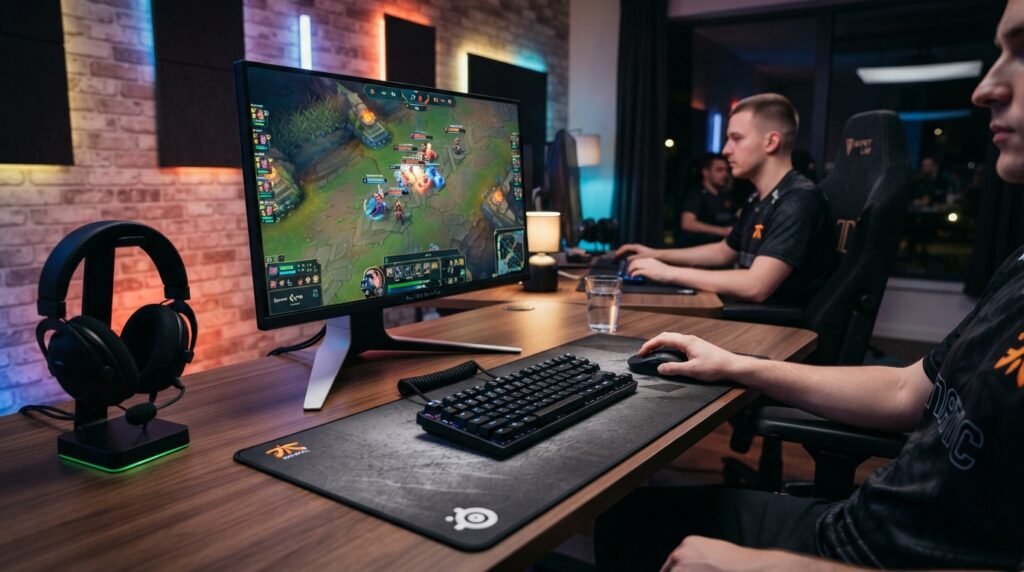
Hardware decisions dictate both your initial balance sheet outlay and your ongoing customer satisfaction marks. Equipping twenty stations with mid-to-high tier graphics cards, high-refresh-rate monitors, durable mechanical keyboards, and commercial gaming seats establishes an engaging environment for both casual sessions and organized tournaments.
Commercial network architecture must feature enterprise-grade switching, dual internet service provider failover capabilities, and advanced traffic shaping to eliminate packet loss. Competitive gamers abandon lounges that exhibit latency spikes, making dedicated commercial symmetrical fiber lines a mandatory monthly operational priority.
Hardware Advantages
- High-specification hardware attracts competitive players unable to afford expensive personal setups at home.
- Standardized workstation builds simplify ongoing maintenance, driver updates, and replacement part inventory.
- Enterprise network switching isolates station traffic, preventing local bandwidth congestion during large game updates.
Operational Realities
- Rapid component obsolescence requires disciplined capital allocation for cyclical GPU and peripheral refreshes.
- Heavy patron usage accelerates wear and tear on headsets, mouse cables, mechanical switches, and chair upholstery.
- High-draw hardware demands larger electrical utility budgets and robust climate control systems.
Hardware depreciation functions as a critical non-cash accounting expense that reduces your taxable corporate income while reflecting tangible equipment wear. Because commercial gaming components face intense daily usage, planning a complete cycle replacement reserve every three to four calendar years prevents sudden technical failures from degrading your customer experience.
Startup Costs, Lease Estimates, and Operating Overhead
Accurate financial forecasting separates viable local storefronts from underfunded ventures that run out of capital before reaching critical mass. Startup costs, lease obligations, and ongoing monthly expenses fluctuate significantly based on metropolitan real estate prices, local labor mandates, and municipal permit fees.
The sample model below outlines estimated figures for a twenty-station venue occupying fifteen hundred square feet in a mid-tier commercial market. Treat these amounts as planning baselines that require localized adjustments during your site evaluation phase.
| Budget Category | Expense Class | Projected Range | Financial Significance |
| Gaming Hardware | Capital Asset | Moderate to High | Primary revenue driver requiring cyclical replacement reserves. |
| Network Gear | Infrastructure | Fixed Upfront | Enterprise switches, firewalls, and low-latency cabling. |
| Buildout Signage | Leasehold Improvement | Variable Outlay | Electrical wiring, partition walls, and exterior storefront brand marks. |
| Permits Insurance | Administrative | Fixed Mandatory | Municipal operating permits, liability coverage, and legal fees. |
| Lease Deposits | Cash Reserve | Location Dependent | First month, last month, and security deposit commitments. |
| Monthly Rent | Fixed Overhead | Monthly Recurring | Base commercial lease cost plus common area maintenance fees. |
| Staff Payroll | Variable Overhead | Hours Dependent | Store supervisors, front-desk customer clerks, and floor hosts. |
| Commercial Power | Operating Utility | Usage Driven | Electric utility bills driven by heavy compute loads and cooling. |
| Station Revenue | Core Inflow | Utilization Based | Hourly computer rentals and tiered customer day passes. |
| Retail Margins | Ancillary Inflow | High Margin | Confectionery, energy drinks, snacks, and branded apparel sales. |
| Net Monthly ROI | Profit Metric | Positive Target | Operational cash return measured against total unamortized startup capital. |
Startup expenditures demand careful sequencing so that equipment warranties do not tick away while contractors complete dry construction. Establishing conservative cash cushions protects your venture against slower initial uptake during the opening operating quarters.
Core Valuation Formulas and Break-Even Benchmarks
Tracking your venue’s ongoing fiscal health requires calculating operational ratios that highlight station efficiency and spending patterns. Relying solely on overall bank balance obscures underlying weaknesses in labor efficiency or hardware utilization.
Implement standardized mathematical benchmarks to guide your weekly pricing modifications and promotional scheduling decisions:
- Station Utilization Rate equals Total Paid Station Hours Divided by Total Available Operational Hours Multiplied by One Hundred.
- Revenue Per Available Station Hour equals Total Gaming Revenue Divided by Available Station Hours.
- Break-Even Point in Operating Hours equals Total Monthly Fixed Overhead Divided by Contribution Margin per Station Hour.
- Gross Profit Margin equals Gross Revenue Minus Direct Costs Divided by Gross Revenue Multiplied by One Hundred.
- Net Operating Profit equals Gross Revenue Minus Operating Expenses Minus Depreciation Allowances.
- Payback Period equals Total Initial Startup Capital Divided by Projected Annual Net Operating Cash Flow.
- Monthly Return on Investment equals Monthly Net Profit Divided by Total Cumulative Cash Invested Multiplied by One Hundred.
A venue that achieves healthy station utilization during weekend surges may still struggle if weekday daytime occupancy lingers near single digits. Use these formulas to pinpoint the exact customer volume and concession spend needed to clear daily building and labor overhead.
Maximizing Hourly Gaming Rates and Recurring Memberships
Hourly station billing provides the primary engine of top-line venue income, but relying solely on single-hour transactions introduces excessive volatility. Implementing tiered hourly packages, evening passes, and predictable recurring memberships creates baseline monthly cash stability.
GrowthBy10x suggests organizing your station access tiers around clear gamer behavior profiles to capture both casual walk-ins and committed regulars.
Hourly Drop-Ins
Standard pay-as-you-play billing suited for spontaneous visitors, traveling tourists, and casual social groups wanting short sessions.
Multi-Hour Passes
Discounted blocks of time purchased upfront that encourage longer visits while boosting upfront transaction value.
Tiered Memberships
Monthly automated billing agreements providing dedicated reservation privileges, discounted hourly rates, and tournament credits.
Automated subscription memberships yield predictable monthly recurring revenue that covers base rental obligations regardless of seasonal weather fluctuations. Storing unused purchased time inside customer management software profiles encourages patrons to return frequently to consume their account balances.
Ancillary Profit Centers: Tournaments, Cafe Sales, and Private Events
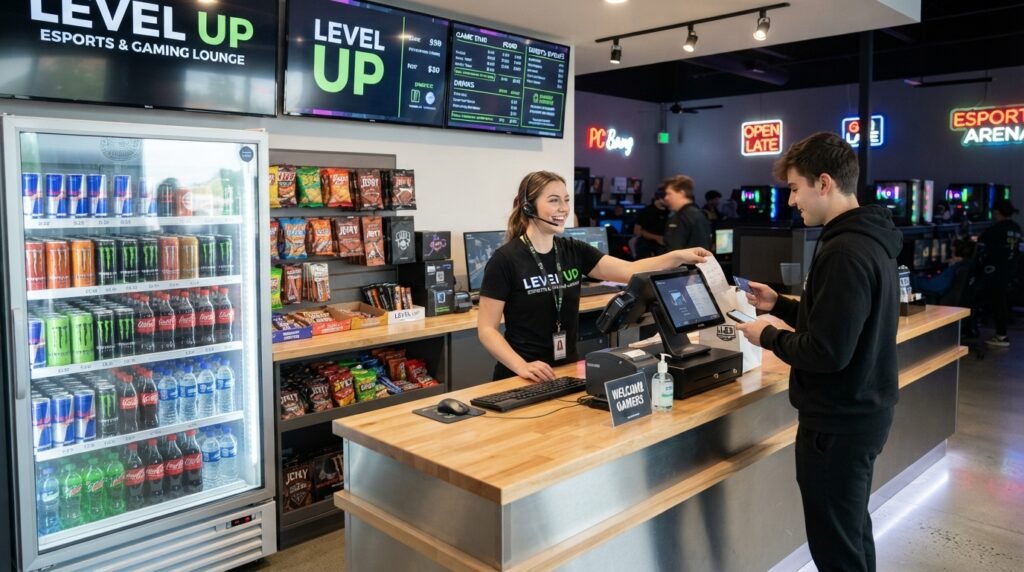
While gaming rigs draw players through the front entrance, high-margin ancillary profit centers frequently generate the majority of net business profit. Packaged energy beverages, specialty coffees, bottled water, and packaged confectionery regularly yield gross profit margins exceeding sixty percent.
Weekend competitive tournaments generate substantial community enthusiasm alongside entry fees and steady spectator foot traffic. Partnering with regional esports leagues, high school clubs, and local gaming groups turns dead floor space into an active competitive arena.
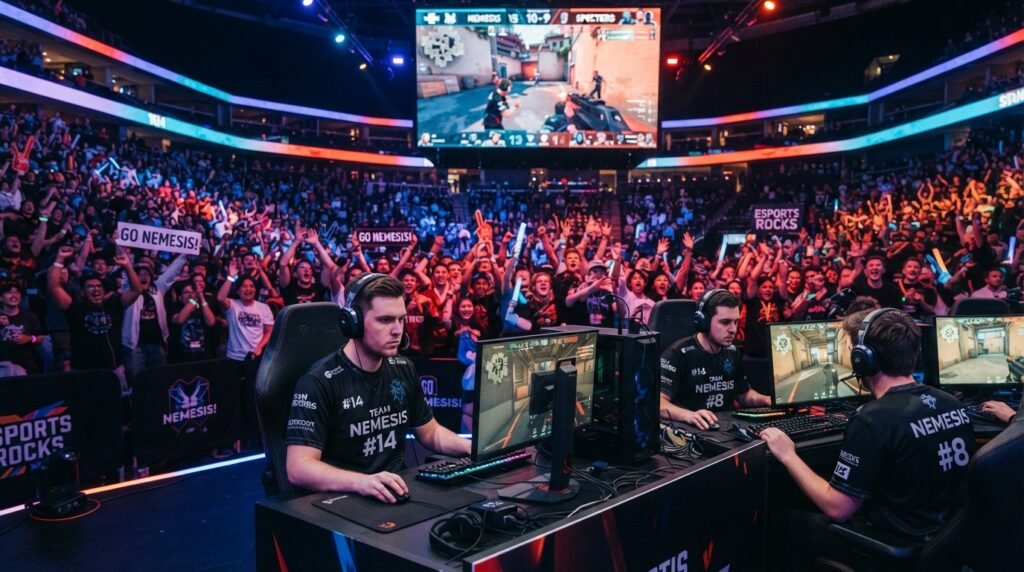
Private birthday packages, bachelor parties, and corporate team-building events offer guaranteed upfront lump-sum payments that eliminate walk-in revenue uncertainty.
Merchandise sales featuring branded apparel, custom mousepads, and collectible gaming accessories strengthen brand identity across your community. Pursuing local commercial sponsors, hardware vendors, and internet providers can offset tournament prize pools in exchange for in-venue marketing exposure.
Scenario Analysis: Conservative, Realistic, and Optimistic Projections
Modeling multiple performance cases prepares your management team for wide shifts in attendance and discretionary spending. Fluctuations in seasonal school schedules, major video game release cycles, and macroeconomic factors all influence entertainment budgets.
Evaluating potential outcomes across conservative, realistic, and optimistic operating environments provides clarity on necessary cash reserves and revenue targets:
- Reflects fifteen to twenty-five percent average station occupancy throughout the operating week.
- Ancillary retail attach rates remain below one concession item per individual visit.
- Operations focus strictly on expense reduction, reduced payroll shifts, and debt avoidance.
Conservative Posture
- Attains forty-five to sixty percent blended occupancy backed by full weekend sellouts.
- Frequent tournament registrations, corporate buyouts, and heavy food and beverage sales.
- Generates robust free cash flow to accelerate capital equipment replenishment and expansion reserves.
Optimistic Growth
A realistic operating target balances strong weekend tournament crowds against moderate weekday afternoon student sessions. Achieving break-even generally requires reaching approximately thirty to thirty-five percent overall station utilization when supported by steady concession attach rates.
Practical Tactics for Weekday Utilization and Cost Control
The central operational challenge facing any gaming lounge operator is filling seats during quiet weekday morning and early afternoon time slots. When stations sit vacant, fixed lease and utility expenses continuously erode cash balances without generating offset income.
Deploying structured programming targets specific community segments that hold open weekday schedules:
- Host remote worker afternoon discount passes combining high-speed internet, comfortable seating, and fresh coffee.
- Partner with local homeschool associations and university student organizations for structured educational coding or esports practices.
- Run themed community game nights featuring fighting games, retro titles, or digital card games with low barrier to entry.
- Cross-train floor personnel to manage customer check-ins, restock cafe inventories, and clean station peripherals simultaneously.
Carefully monitor HVAC schedules and equipment power sleep states during off-peak hours to prevent utility charges from consuming your weekly station profit.
Protecting operating cash flow requires strict inventory controls over high-cost concession items and immediate repair protocols for worn peripherals. Implementing automated station management software shuts down inactive displays and systems, directly curbing preventable power drain.
Staffing, Commercial Licensing, and Day-to-Day Operations
Operating a public commercial gaming space requires compliance with software publisher terms, intellectual property standards, and municipal commercial codes. Personal software licenses do not automatically authorize public commercial distribution across multi-user environments.
Deploy specialized gaming center management software that handles station time tracking, patron billing, customer game licensing compliance, and automated workstation imaging. Standardized deployment software restores operating systems to clean states between user sessions, removing personal player credentials and mitigating digital security risks.
- Obtain commercial cyber liability and general commercial liability insurance coverage protecting your business against equipment theft and personal injury.
- Secure appropriate music performance licensing if playing background music or streaming content over your public address system.
- Maintain staff-to-station ratios that allow hosts to sanitize headsets, keyboards, and mice between consecutive customer sessions.
- Establish transparent house rules covering sportsmanship, workstation food consumption, and age-based curfew requirements.
Day-to-day managerial excellence relies on repeatable cleaning checklists, proactive hardware diagnostics, and friendly customer service. Enthusiastic staff who actively organize impromptu matches and resolve technical hitches turn first-time walk-ins into committed monthly community advocates.
Pre-Lease Validation Checklist for Founders
Signing a multi-year commercial lease represents the single largest financial commitment in your business launch trajectory. Validating structural, municipal, and financial realities prior to signing legal documents shields your initial capital reserves.
Complete these critical due diligence steps before executing any real estate contract:
- Confirm written landlord authorization for extended nighttime operational hours and competitive gaming event noise levels.
- Obtain certified utility load histories to verify that building power and cooling can handle full station operation.
- Verify municipal parking ratios to satisfy local zoning requirements for public assembly and amusement spaces.
- Audit surrounding cellular connectivity and negotiate written access for commercial fiber optic internet line drops.
- Review municipal health department standards governing retail food distribution, beverage coolers, and handwashing sinks.
- Secure written landlord approval for illuminated exterior brand signage and customer window vinyl displays.
- Evaluate emergency egress points, commercial fire suppression systems, and accessibility compliance mandates.
Taking the time to verify physical infrastructure saves thousands of dollars in post-lease electrical retrofits and code remediation. When the physical premises align perfectly with your technical equipment load, your construction phase progresses smoothly toward opening day.
Frequently Asked Questions About Gaming Lounge Operations
How does a gaming lounge business plan address commercial game licensing?
A gaming lounge business plan accounts for commercial game licensing by incorporating authorized esports management platforms and commercial software agreements. These specialized management tools provide lawful access to popular multiplayer titles while allowing patrons to log into their personal publisher accounts securely.
Why is hardware depreciation critical when budgeting for a gaming cafe?
Hardware depreciation is critical because rapid technological progress and heavy daily patron usage cause gaming components to experience substantial wear. Allocating ongoing cash reserves for equipment replacement maintains competitive visual performance and prevents sudden capital shortfalls when upgrades become necessary.
What customer spend is necessary to reach operational break-even?
Reaching operational break-even requires that combined hourly station rental fees and concession purchases surpass fixed daily lease, utility, and labor overhead. Venues that maintain steady beverage and snack sales typically need thirty to thirty-five percent average station occupancy across the operating week.
Can tournament events generate reliable profits for small venues?
Tournament events generate reliable profits when operators package registration entry fees with mandatory food and beverage purchases and secondary merchandise sales. In addition to direct player fees, organized weekend competitions boost overall venue awareness and attract paying spectators to the storefront.
Building a Resilient Local Gaming Business
Launching a small-scale gaming lounge demands rigorous financial discipline, robust network engineering, and consistent community engagement. By balancing steady hourly workstation fees with high-margin food sales and organized events, local founders can build an enduring, profitable entertainment venue that serves passionate regional gamers.
Download the Complete Cafe Spreadsheet
Prepare your upcoming local business launch by organizing your startup equipment budgets, operational lease assumptions, and cash flow projections into a single planning model.