
Time-blocking for solopreneurs who don’t control their own schedule works by replacing rigid hourly appointments with adaptable time windows, strategic buffers, and protected priority sessions. Instead of attempting to govern every minute of the day, an adaptive system accepts client demands and unexpected interruptions while keeping essential business goals intact.
Your business structure and client communication requirements determine the best balance between responsive hours and focused creation. When your calendar reflects reality rather than wishful thinking, daily momentum becomes sustainable even during chaotic workweeks.
Why Traditional Time-Blocking Fails for Reactive Schedules
Standard productivity advice assumes you hold absolute authority over your calendar from morning until evening. Most solopreneurs operate in a reactive environment where urgent client messages, unexpected revisions, and shifting project timelines constantly disrupt rigid plans.
When every hour is assigned to a single complex project, one late email or sudden call creates a domino effect. The entire day collapses, leading to frustration, guilt, and the mistaken belief that calendar planning simply does not work for independent business owners.
Rigid calendars break because they treat every unexpected interruption as a failure. A resilient system treats incoming requests as normal business events that your schedule can absorb naturally.
Attempting to force an unpredictable business model into an inflexible calendar invites stress. True schedule control comes from building a framework designed specifically to bend without breaking.
Separating Your Work into Four Core Calendar Categories
Structuring a reactive calendar starts with categorizing your obligations according to their flexibility and purpose. Sorting work into four distinct categories prevents urgent client support from crowding out long-term business health.
Treating distinct work styles identically on your calendar creates constant conflict between immediate demands and future growth. Separating your time into functional modes clarifies exactly where incoming tasks belong.
| Category | Focus Type | Flexibility | Primary Function |
| Fixed | External | None | Client meetings and hard delivery deadlines |
| Flexible | Internal | High | Deep work projects and business development |
| Responsive | Reactive | Medium | Inbox management and sudden troubleshooting |
| Recovery | Rest | Low | Mental breaks and creative replenishment |
Balancing these four areas helps you honor existing commitments without sacrificing personal stamina. By clearly labeling responsive time, you prevent unplanned interruptions from spilling into quiet analytical sessions.
Establishing Anchor Blocks Rather Than Rigid Hourly Schedules
Anchor blocks provide steady landmarks across your day without binding you to specific clock times. Instead of scheduling a specific task at an exact minute, you assign work themes to broad segments of the day.
A morning anchor might center on deep creative work, while an afternoon anchor handles correspondence and active client projects. If an unexpected call delays the start of an anchor window, the priority focus remains clear when you return to your desk.
- Fixed minute-by-minute appointments
- Complete disruption from minor delays
- High administrative overhead to maintain
- Unrealistic expectations for reactive businesses
Rigid Hourly Schedules
- Broad thematic windows across the day
- Easy absorption of shifting timelines
- Clear guidance on current work phase
- Sustainable workflow under changing priorities
Flexible Anchor Blocks
Anchors create a steady daily rhythm that survives interruptions. You always know the primary goal of your current block, whether you begin early or face delays.
Reserving Protected Windows for Revenue-Generating Work
Client service often overtakes internal growth tasks such as marketing, sales conversations, and pipeline development. Solopreneurs who rely solely on leftover hours rarely find time to build sustainable business wealth.
Protecting a recurring priority window defends your financial future from the noise of immediate operational demands. Reserving this focus period early in your routine keeps business advancement consistent before external demands claim your attention.
Treat your internal business growth like your most demanding client. Protect this dedicated block on your calendar and complete revenue tasks before opening communication channels.

Protected priority windows keep long-term business growth moving forward regardless of daily client requests.
Consistent progress on core offerings maintains financial stability during client transitions. Guarding these windows helps you move from reactive freelancing to intentional business leadership.
Absorbing Interruptions with Strategic Buffer Blocks
Buffer blocks act as calendar shock absorbers designed specifically to handle unplanned events. Without intentional buffers, a single client revision or delayed phone call inevitably forces personal work into late evenings.
Scheduling open buffer windows throughout the week creates safe landing zones for task spillovers and sudden emergencies. When interruptions arise, you redirect them into these pre-assigned spaces rather than scrambling to shuffle the entire week.
Avoid scheduling back-to-back commitments without open spaces. A calendar packed without buffer windows leaves zero margin for routine operational delays.
If an afternoon passes without sudden issues, your buffer becomes bonus time for deep work, early administrative cleanup, or restful recovery. This protective margin transforms daily surprises from major crises into routine adjustments.
Designing Minimum Viable Sessions Around Daily Energy Levels
Not all work hours offer identical cognitive capacity. Solopreneurs perform best when aligning complex decision-making with natural peak focus while assigning repetitive tasks to periods of lower stamina.
Defining minimum viable sessions prevents total loss of momentum during exhausting or heavily disrupted days. Completing a reduced version of a priority task maintains consistency without draining your remaining reserves.
High Cognitive Focus
Reserve peak morning energy for strategic planning, creative output, and complex client deliverables that demand deep thinking.
Moderate Stamina
Use secondary energy windows for active collaboration, client check-ins, routine revisions, and structured problem-solving.
Low Energy Administration
Direct low-focus periods toward invoice tracking, routine file organization, minor inbox clearing, and scheduling.
Scaling a project down to its core components keeps progress steady on hectic days. Moving forward with a short session proves far more productive than postponing work entirely.
A Step-by-Step Method to Build Your Flexible Scheduling System
Constructing a dependable calendar framework requires an intentional routine that balances structure with real-world agility. Following a clear setup process turns abstract planning into practical daily clarity.
Establishing this system establishes realistic boundaries around client access while protecting your creative focus. Implement these steps to assemble an adaptable routine that withstands fluctuating workloads.
- Identify your non-negotiable personal obligations, health routines, and hard external client commitments.
- Establish recurring anchor blocks across your morning and afternoon to define broad themes for each day.
- Set aside dedicated priority windows for business development and revenue-focused initiatives before opening communication apps.
- Insert open buffer periods across your weekly calendar to absorb unexpected client revisions and emergent issues.
- Designate specific responsive windows for inbox clearing, team updates, and phone conversations.
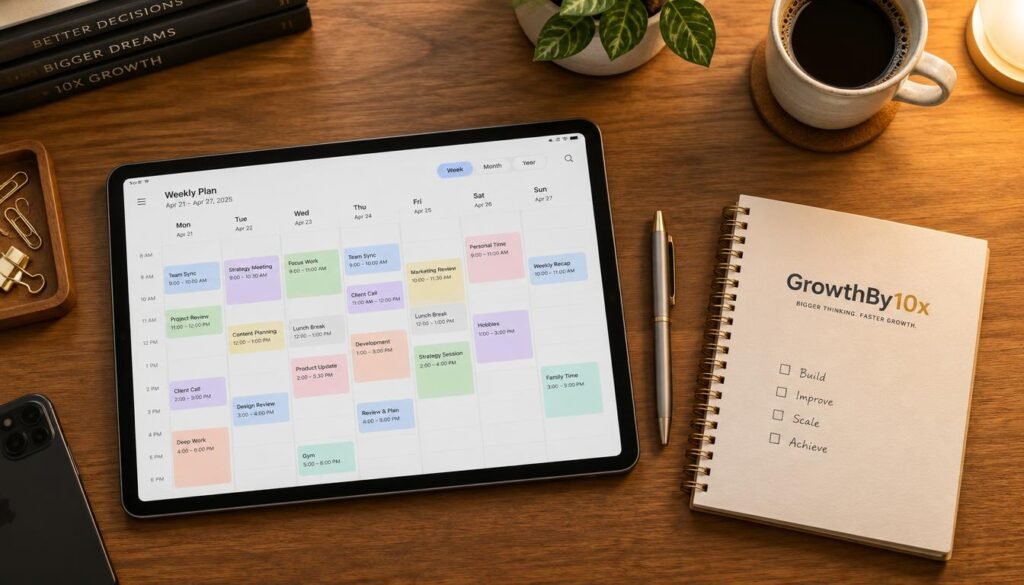
Building structured buffers into your weekly routine provides the flexibility needed to handle sudden client requests.
Reviewing this structure regularly keeps your expectations grounded in current business reality. Adjust your blocks whenever client obligations increase or seasonal projects demand temporary shifts.
Managing Unexpected Obligations and Client Emergencies
Client emergencies inevitably disrupt even the most carefully constructed plans. The key to maintaining control lies in having an objective triage process ready before urgency strikes.
Many incoming messages appear urgent simply because of the sender’s tone rather than genuine business impact. Pausing to assess actual priorities prevents you from abandoning your core schedule for minor issues.
- Assess whether the issue genuinely threatens client revenue or safety before dropping your current focus block.
- Shift interrupted flexible tasks directly into your next available buffer window instead of working late into the night.
- Communicate clear, calm delivery expectations to clients rather than immediately offering instant turnarounds.
- Log recurring disruptions to identify whether particular accounts require clearer boundaries or updated service agreements.
Establishing predictable communication habits conditions clients to respect your delivery timelines. When clients recognize that their requests are handled systematically, demands for immediate turnaround naturally decrease.
A Practical Sample Schedule for Unpredictable Business Days
An adaptable schedule coordinates different types of work throughout the day without enforcing rigid start times. This framework provides sufficient structure to maintain direction while remaining flexible enough to absorb real-world friction.
Dividing the day into distinct functional phases clarifies current priorities while keeping space for client communication. This sample layout demonstrates how a reactive solopreneur balances internal focus with external service.
| Phase | Block Name | Primary Focus | Flexibility Rule |
| Early | Priority Anchor | Revenue growth and deep development | Protected from messages and meetings |
| Midday | Client Anchor | Active project deliverables and tasks | Movable within the midday window |
| Afternoon | Responsive Zone | Meetings, calls, and email triage | Dedicated space for reactive work |
| Late | Daily Buffer | Task overflow and schedule reset | Absorbs daytime interruptions smoothly |
Adopting phased work periods keeps your mental focus sharp throughout varied daily responsibilities. You move smoothly from creative production to collaborative support without feeling scattered.
Common Time-Blocking Mistakes Solopreneurs Make
Adopting an adaptable time-blocking system requires unlearning habits carried over from traditional corporate environments. Recognizing common traps protects your routine from early frustration and burnout.
Small planning errors often compound into major schedule breakdowns over the course of a demanding week. Avoiding these common traps keeps your daily workflow smooth and sustainable.
Overloading the Calendar
Filling every available window with intense deliverables leaves zero space for natural operational friction. An overpacked calendar guarantees immediate derailment the moment a single meeting runs long.
Treating All Demands as Urgent
Allowing every incoming message to interrupt deep work destroys cognitive momentum. Pausing to evaluate true business impact protects your focus from reactionary fire drills.
Abandoning After One Bad Day
Ditching your entire scheduling framework after a chaotic afternoon surrenders long-term control. Treat disruptions as normal variance, reset your anchor blocks, and restart the routine the following morning.
Recognizing that disruptions are part of normal solopreneur operations eliminates unnecessary guilt. A resilient schedule anticipates occasional chaos and provides a clear path back to productivity.
Reviewing and Refining Your Calendar System Each Week
A scheduling system remains effective only when regularly updated to reflect ongoing business shifts. Conducting a weekly review allows you to observe where time leaks occurred and where buffer spaces need expansion.
Setting aside a brief administrative period at the end of each workweek establishes clarity for the coming days. Assessing past schedule friction provides the data needed to make informed adjustments.
Use your weekly review to identify patterns in client requests and project delays. Adjusting your anchor sizes based on actual performance creates an increasingly accurate calendar.
Continual refinement prevents friction from building into systemic burnout. Regular adjustments keep your calendar aligned with evolving client needs and long-term financial goals.
Frequently Asked Questions
How can I protect focus time when clients demand immediate responses?
Set clear communication expectations during client onboarding and establish dedicated responsive windows throughout the day. Clients rarely require instant answers when they know consistent update times are built into your daily schedule.
What should I do when an urgent request wipes out my entire morning?
Shift your morning priority into the afternoon buffer window or execute a minimum viable version of the task. Accept the disruption calmly and resume your regular anchor routine the following morning without trying to force late-night catch-up work.
How many buffer blocks should I schedule each week?
Place at least one buffer block in the late afternoon of each working day, with an additional open window reserved toward the end of the week. Unpredictable client loads benefit from larger buffers to prevent task spillover from damaging personal rest.
Can I time-block effectively if my daily meeting schedule changes constantly?
Yes, by organizing your calendar around flexible anchor blocks rather than rigid hourly appointments. Anchor your deep work to specific conditions, such as completing key tasks before opening email, regardless of when meetings appear.
How do I prevent non-revenue client work from taking over my calendar?
Schedule your internal business building and revenue development during your earliest energetic window before addressing external requests. Treating your own business growth as an unmovable commitment protects your pipeline from routine operational drift.
Building Long-Term Momentum Through Adaptive Scheduling
Time-blocking for solopreneurs who don’t control their own schedule is about protecting essential priorities rather than enforcing rigid perfection. Embracing flexible anchor blocks and purposeful buffer windows gives you the resilience to serve clients effectively while steadily advancing your own business growth.